

9 Creative Japandi Bedroom Ideas for a Harmonious Aesthetic
Japandi design blends Japanese minimalism with Scandinavian simplicity, creating bedrooms that feel serene, functional, and visually balanced. By combining natural textures, muted color palettes, and purposeful furniture, this aesthetic encourages relaxation and mindfulness. Whether your bedroom is compact or spacious, these nine creative Japandi bedroom ideas will inspire a harmonious atmosphere that nurtures calmness and sophistication while embracing the warmth of natural materials.
1. Neutral Toned Minimal Haven
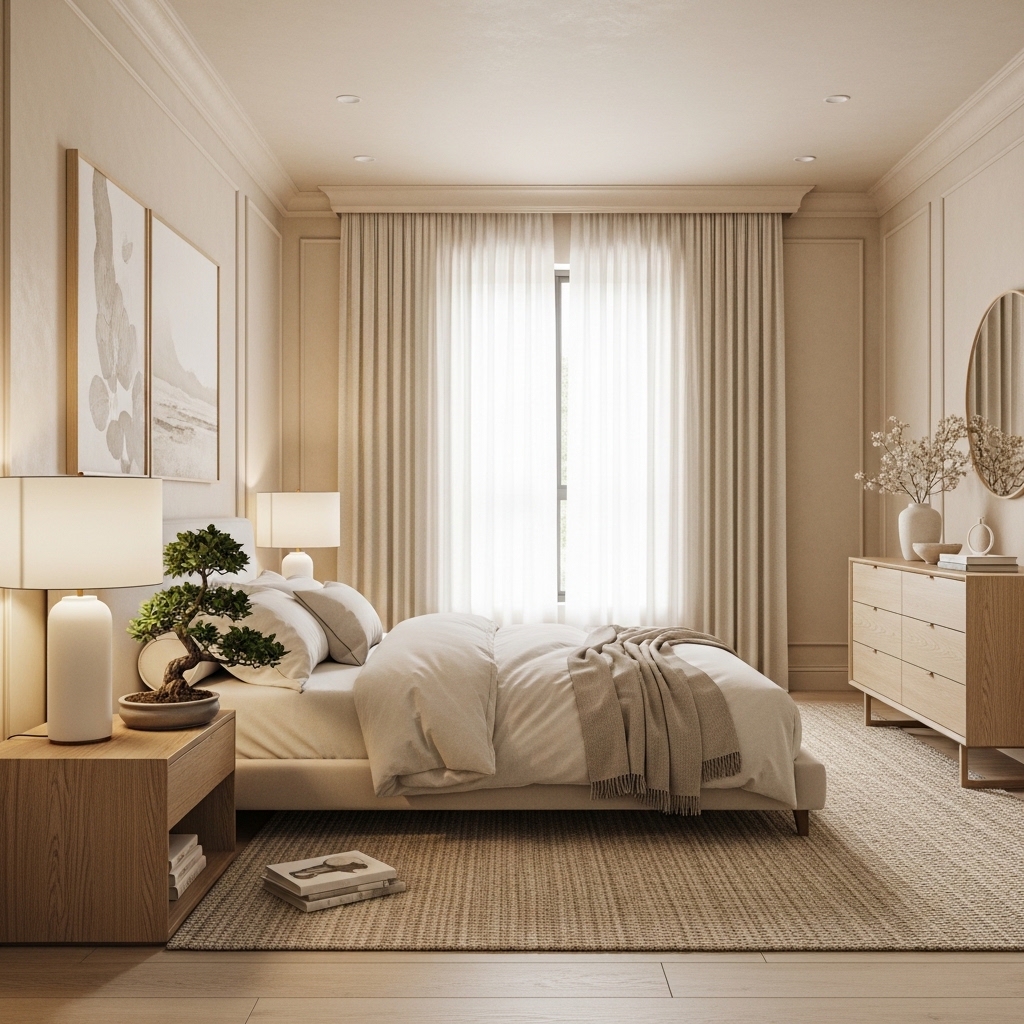
Neutral tones define the essence of Japandi style. Soft creams, light greys, and warm beige create a calming environment while allowing natural wood textures to shine. Keep furniture simple and low-profile, focusing on clean lines without ornate details. Minimalist décor, such as a single bonsai or a neutral ceramic vase, draws attention to natural materials and creates a sense of tranquility. This approach ensures the bedroom feels spacious, restful, and effortlessly elegant.
Layering textures enhances visual interest in a neutral space. Linen bedding, wool throws, or subtle jute rugs add depth without clutter. Natural light should be emphasized through sheer curtains or minimal window coverings to maintain airiness. Each element contributes to a cohesive, harmonious atmosphere, allowing the mind to relax. This style is perfect for creating a sanctuary-like bedroom that balances functionality with aesthetic appeal.
2. Low-Profile Platform Bed Focus
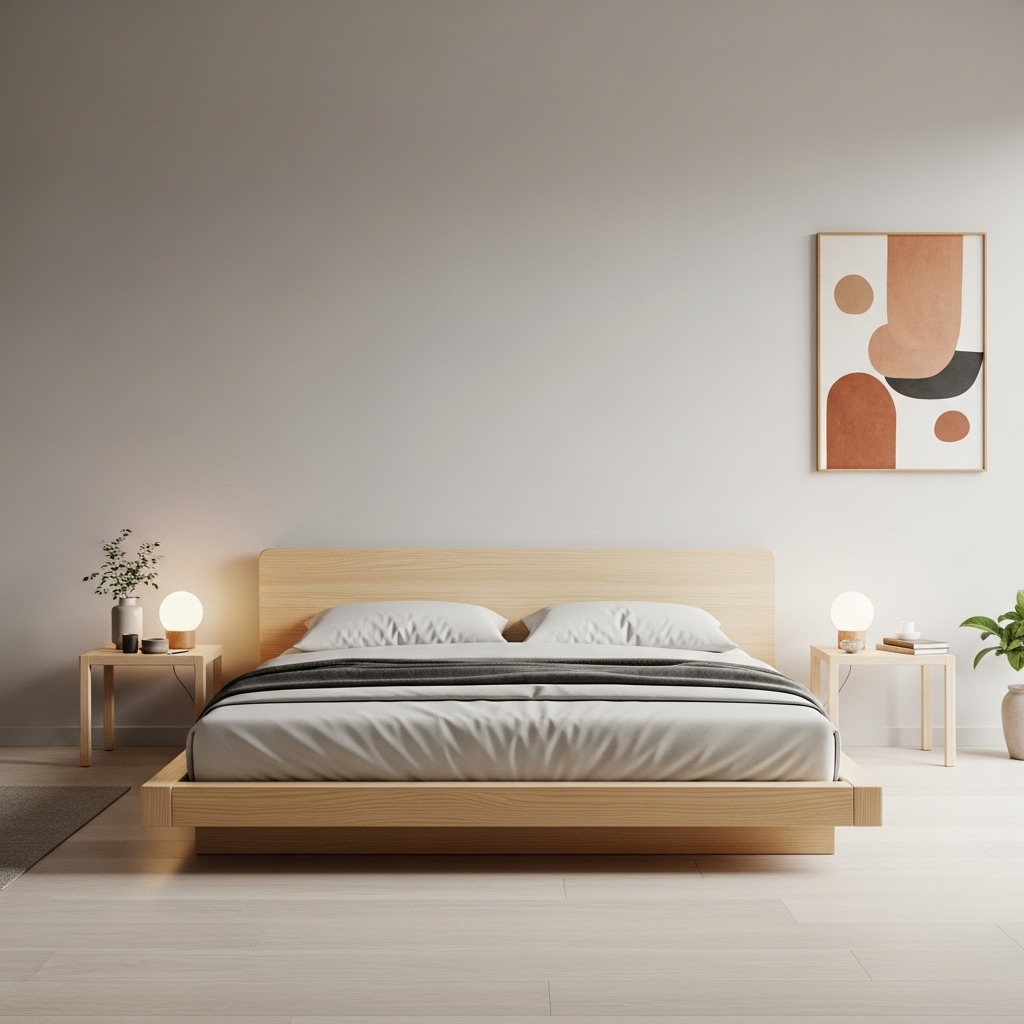
A low-profile platform bed is central to Japandi bedrooms, highlighting simplicity and proportion. Choose a bed with clean lines and light wood finishes to maintain warmth and balance. Surround it with minimal side tables and understated lighting. The platform bed anchors the room visually, while open space around it promotes calmness. This minimalist approach encourages mindful organization and emphasizes quality over quantity, which is a key principle of Japandi interiors.
Pair the bed with subtle accents like a soft area rug or a simple wall art piece to create harmony. Avoid visual clutter by limiting decorative objects to essentials. The low-profile design encourages open sightlines, enhancing the sense of space. By prioritizing functional furniture and natural materials, the bedroom achieves a tranquil environment where every element feels intentional and contributes to a serene and cohesive aesthetic.
3. Natural Wood Accents
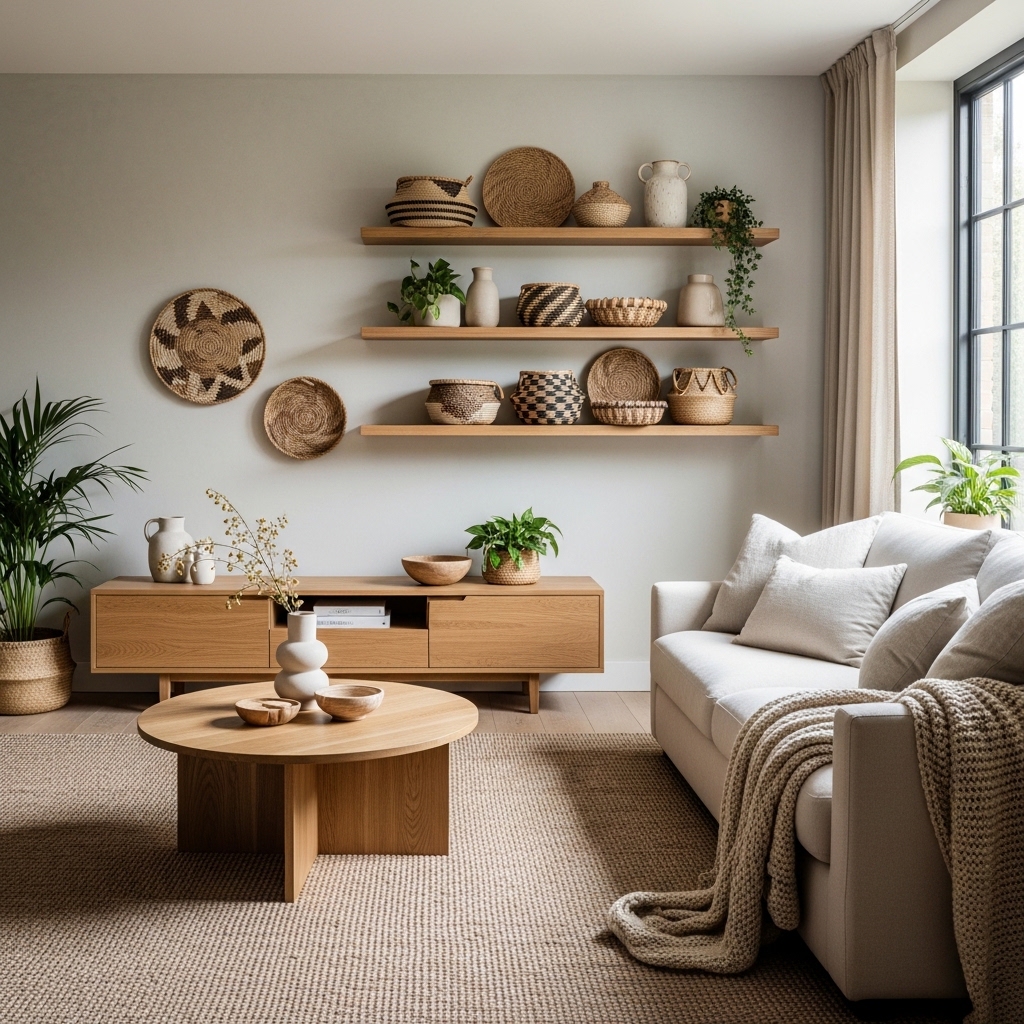
Wood brings warmth and texture to a Japandi bedroom. Opt for light-toned woods like oak or ash for bed frames, flooring, and shelving. Introduce woven baskets or trays to add tactile interest. The natural grains and subtle imperfections in wood create an organic, comforting environment while maintaining simplicity. Wooden accents harmonize with neutral tones, reinforcing the calming aesthetic and emphasizing the connection to nature central to Japandi design.
Balance is essential when integrating wood elements. Mix horizontal and vertical lines for visual variety without overwhelming the space. Pair wood with soft textiles like cotton or linen to soften the overall look. This approach ensures the bedroom feels welcoming and sophisticated while preserving a sense of minimalism. Wood accents provide both functional storage and decorative appeal, completing a harmonious Japandi environment.
4. Minimal Storage Solutions
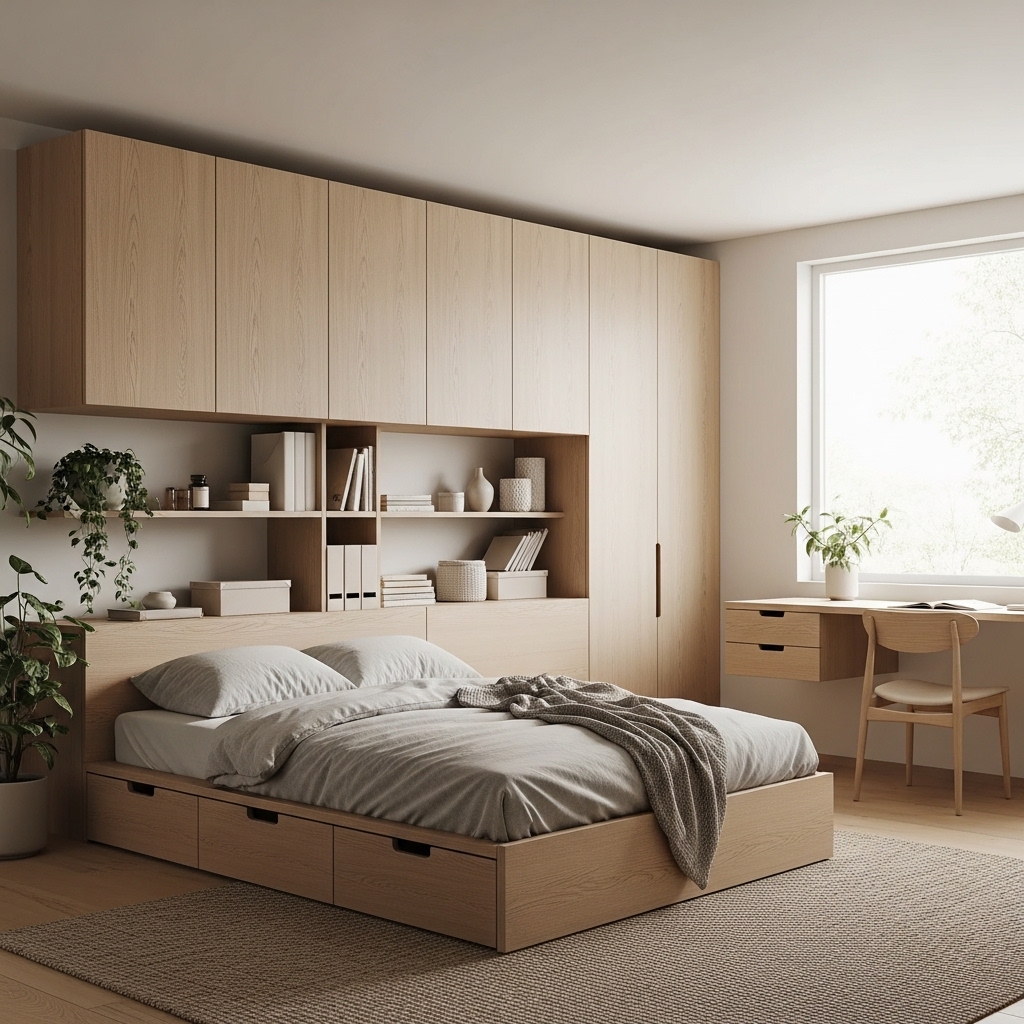
Clutter disrupts the serene vibe of a Japandi bedroom, making smart storage essential. Built-in drawers, under-bed storage, and sleek cabinets keep belongings organized without dominating the room visually. The focus remains on clean surfaces and open spaces. Minimal storage encourages a peaceful environment, allowing natural textures, lighting, and furniture forms to be the focal points. Thoughtful storage design reinforces harmony and functionality.
Concealed storage maintains aesthetic cohesion by hiding items that could create visual noise. Opt for furniture with subtle handles or push-to-open mechanisms to preserve clean lines. Organize textiles, books, and personal items efficiently to enhance tranquility. This minimalist approach ensures the bedroom remains a calming retreat, where the sense of order supports relaxation, sleep quality, and overall well-being.
5. Soft Textiles and Layers
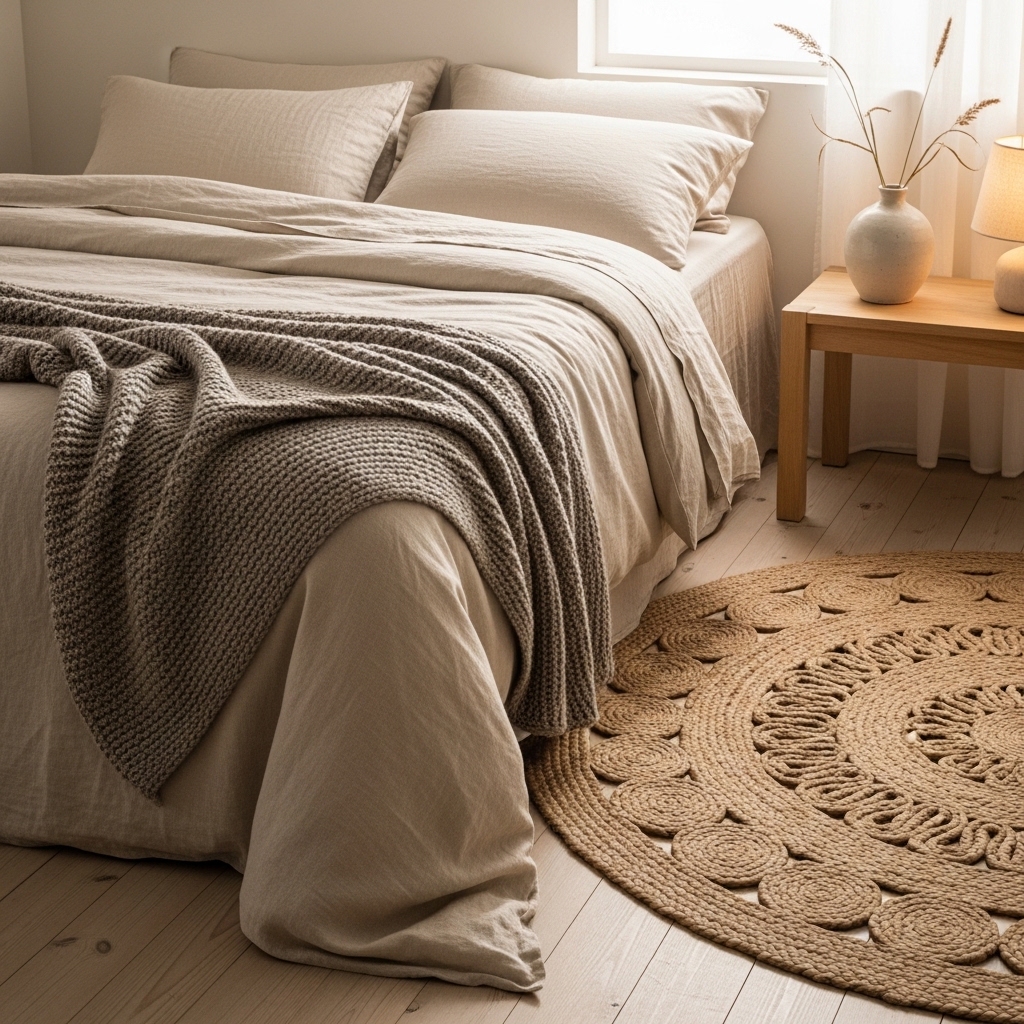
Layering soft textiles adds warmth and comfort to a minimalist Japandi bedroom. Use natural fabrics such as linen, cotton, and wool to enhance tactile appeal. A simple bedspread can be paired with a soft throw or textured cushions, creating a cozy yet refined look. Rugs in subtle hues provide grounding while contributing to the overall calm aesthetic. Textiles complement natural materials and maintain a balanced, harmonious environment.
Attention to texture prevents the neutral space from feeling sterile. Combine smooth, coarse, and woven materials in subtle patterns or solids. Soft textiles invite relaxation and tactile engagement, which is central to creating a serene retreat. Every layer should have purpose, reflecting the Japandi principle of functional beauty. Thoughtful layering balances simplicity with comfort and ensures the bedroom remains restful and aesthetically pleasing.
6. Greenery and Minimal Plants
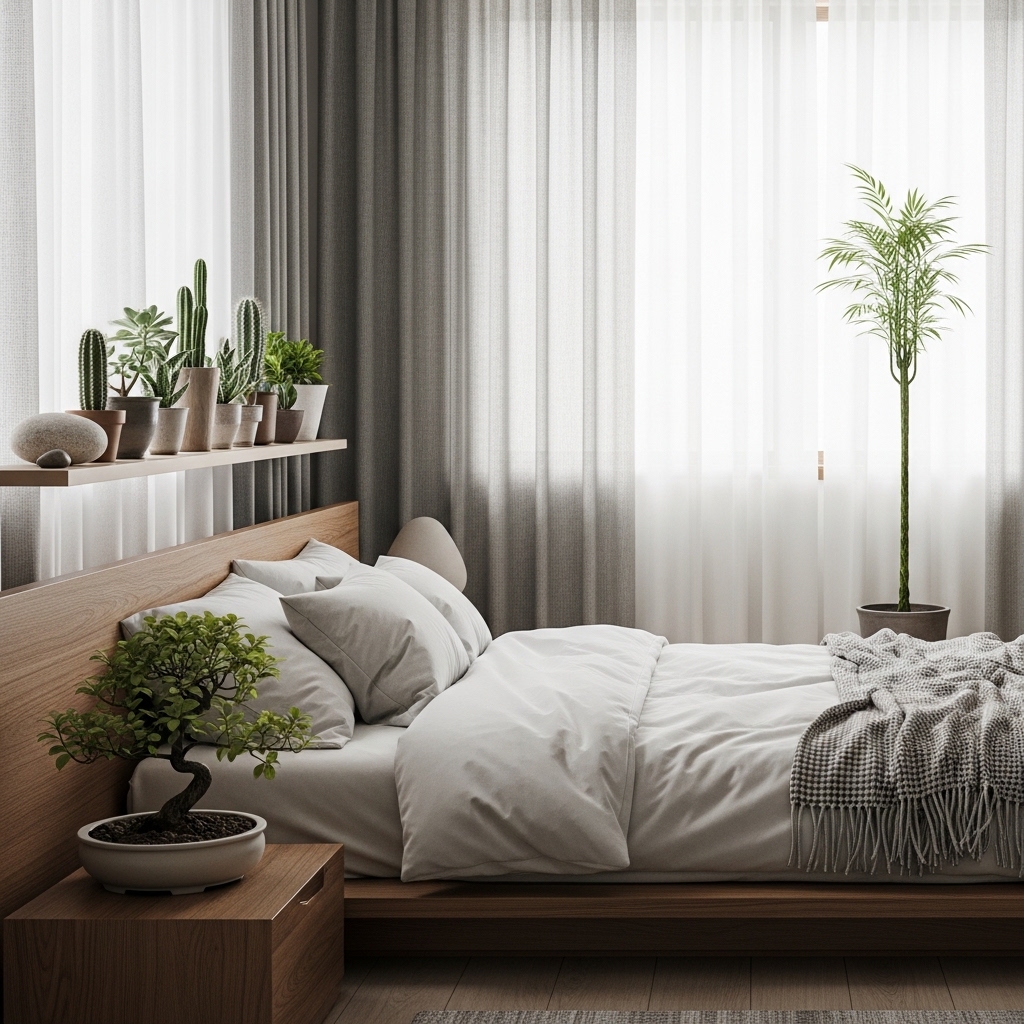
Plants bring life and serenity to a Japandi bedroom. Minimal arrangements like bonsai, snake plants, or succulents complement natural tones and maintain the uncluttered aesthetic. Greenery creates a visual connection to nature, promoting calmness and mindfulness. Position plants near windows for natural light, enhancing their vibrancy while reinforcing the bedroom’s tranquil and airy atmosphere.
Keep plant displays minimal to avoid disrupting the clean aesthetic. Choose simple pots in neutral colors or natural materials like ceramic and clay. A few well-placed plants can anchor the room visually and provide a focal point. Integrating greenery enriches the sensory experience, fosters relaxation, and enhances harmony, aligning with the core philosophy of Japandi design where nature and simplicity coexist.
7. Strategic Lighting Choices
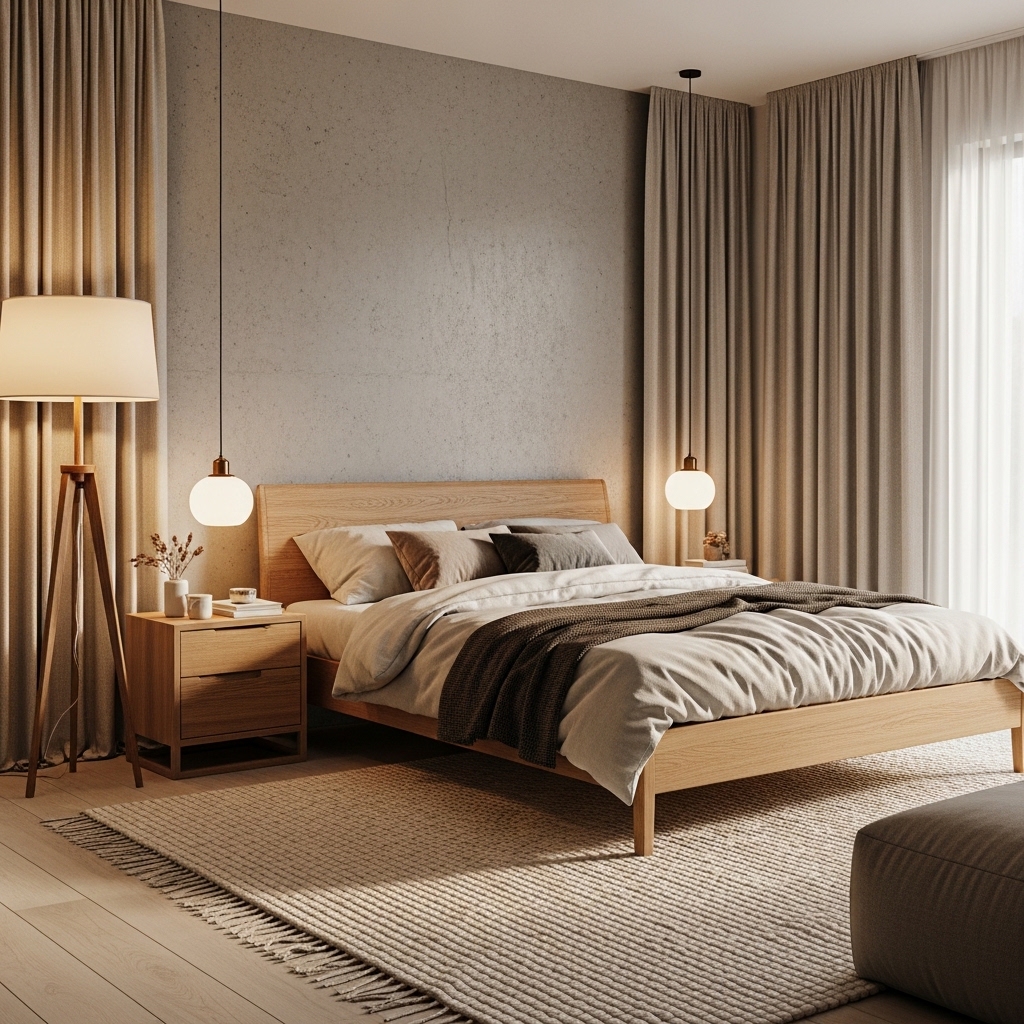
Lighting defines mood and balance in a Japandi bedroom. Soft ambient lighting from floor or pendant lamps creates warmth without harsh glare. Maximize natural sunlight during the day with sheer curtains to maintain openness and airiness. Lighting should emphasize the simplicity of furniture and décor, enhancing textures, colors, and natural materials while reinforcing a calm, serene environment conducive to rest and relaxation.
Layer lighting for versatility, combining ambient, task, and accent lights subtly. Choose fixtures in neutral tones or natural materials to complement the overall aesthetic. Avoid overly ornate designs that distract from the simplicity. Thoughtful lighting enhances the bedroom’s sense of space and depth, creating a harmonious and peaceful atmosphere central to Japandi design principles.
8. Neutral Wall Art and Decor

Wall art should enhance, not overwhelm, a Japandi bedroom. Choose neutral, abstract, or nature-inspired pieces that reflect serenity. Avoid cluttered gallery walls; one or two thoughtfully placed pieces maintain visual balance. Neutral ceramics, minimal sculptures, or small decorative items complement furniture and textiles, reinforcing the sense of calm and intentional design without creating distraction.
Placement and scale are key to maintaining harmony. Art should align with furniture proportions and create subtle focal points. Stick to muted tones that resonate with the room’s palette, maintaining cohesion. Strategic decor supports a tranquil atmosphere, turning the bedroom into a visually balanced, restful space that embodies Japandi ideals.
9. Mindful Accessory Selection

Accessories in Japandi design are purposeful and minimal. Select items that offer function or subtle beauty, like a ceramic vase, wooden tray, or scented candle. Avoid overcrowding surfaces, allowing each piece to complement the neutral palette and natural materials. Thoughtful accessories reinforce the bedroom’s serene, uncluttered aesthetic while providing subtle focal points that enhance mindfulness and calm.
Every decorative choice should align with simplicity and harmony. Choose accessories with natural textures, soft tones, and minimal patterns to avoid visual disruption. This intentionality ensures the bedroom feels cohesive and restful, reflecting the Japandi philosophy of balancing functionality, natural beauty, and minimalism to create a truly harmonious space.
Conclusion
Japandi bedrooms offer a perfect blend of minimalism, warmth, and harmony. By combining natural textures, muted color palettes, low-profile furniture, and thoughtful accessories, these nine creative Japandi bedroom ideas create a tranquil retreat. The focus on simplicity, functionality, and mindful design ensures your space feels serene, stylish, and deeply restorative. Incorporating these ideas allows you to cultivate a bedroom that is not only visually balanced but also nurturing for rest, relaxation, and overall well-being.