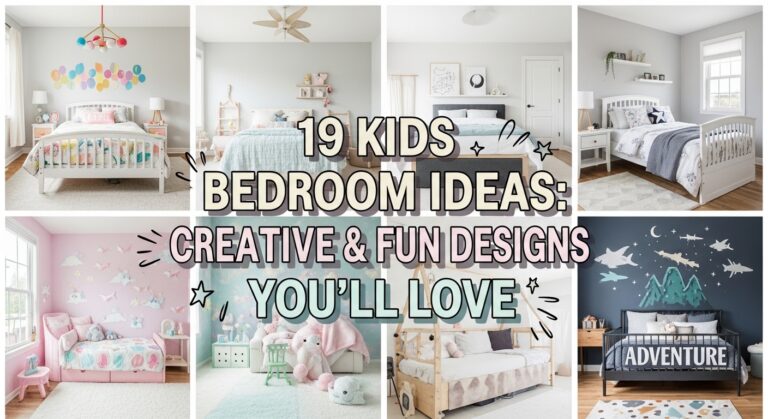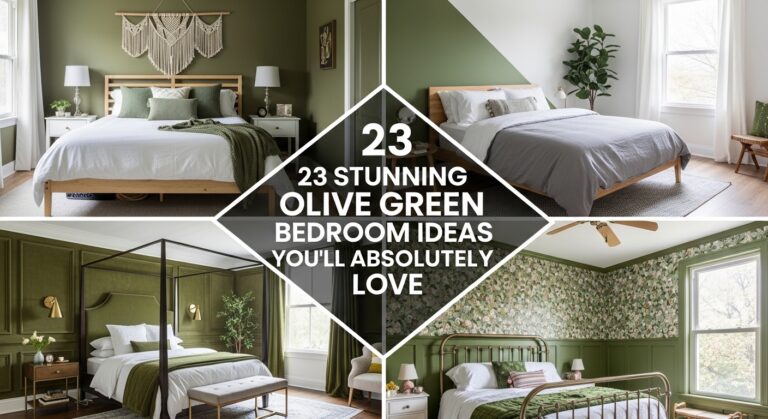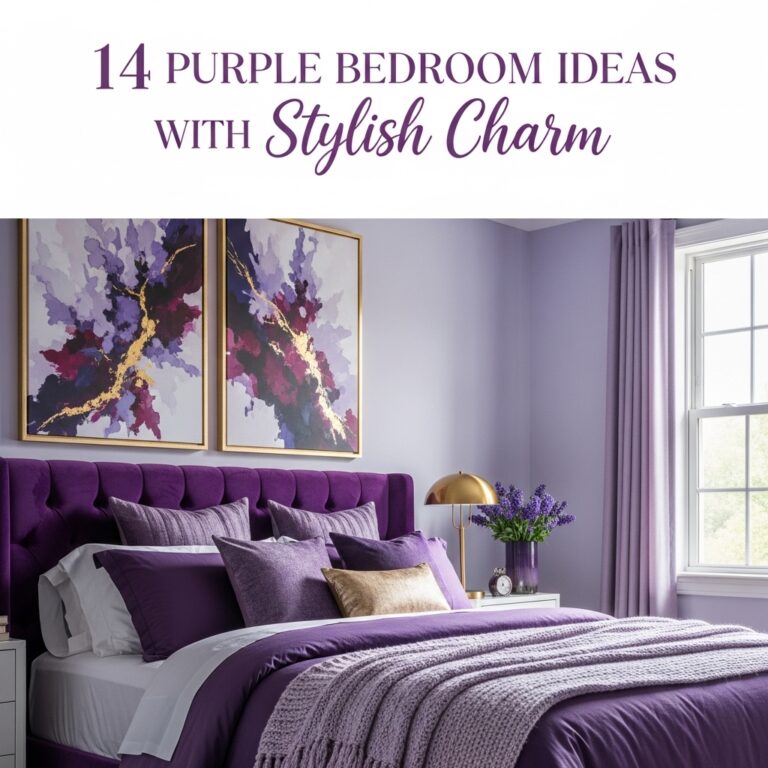
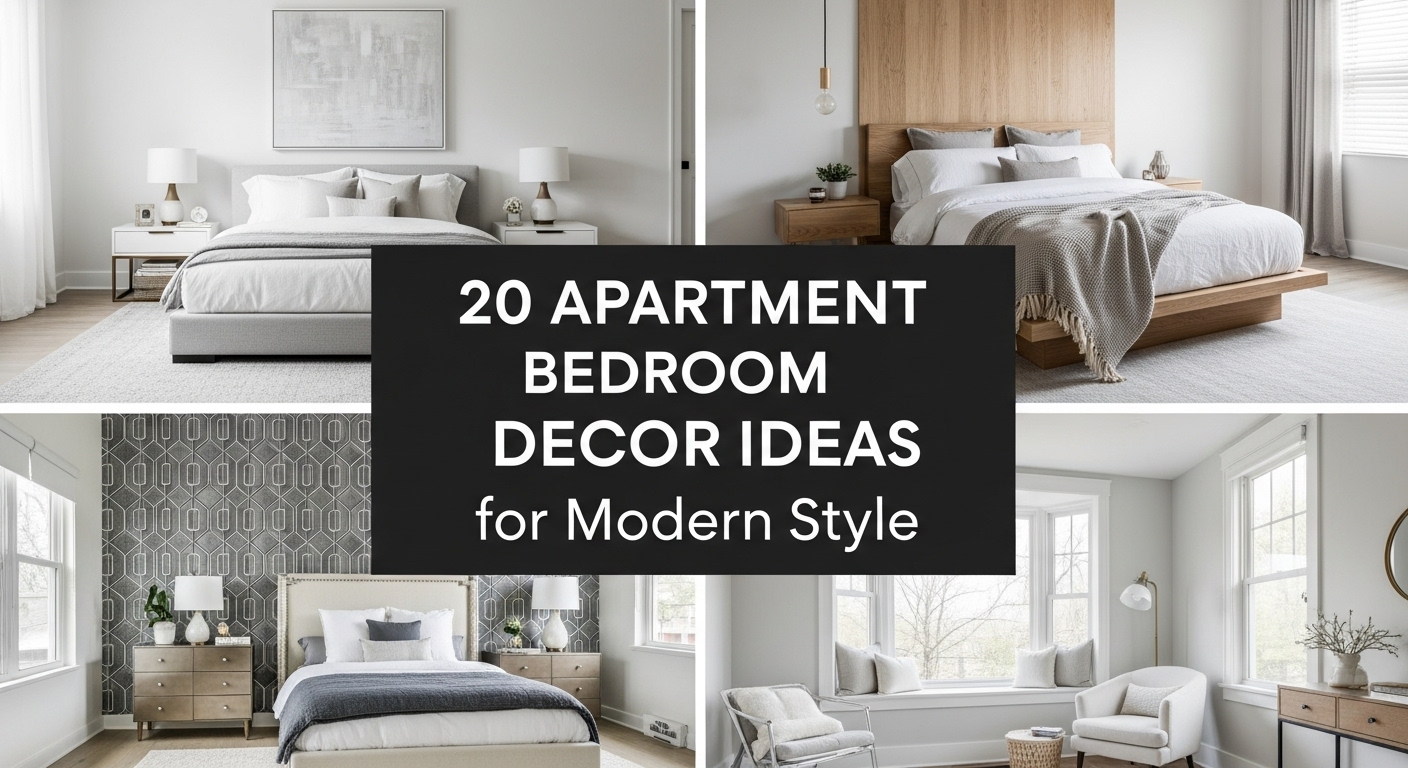
23 apartment bedroom decor ideas for modern style
Introduction
A modern apartment bedroom is not about filling space with trends. It is about designing a room that supports rest, clarity, and everyday comfort. Thoughtful apartment bedroom decor ideas help small or mid-sized bedrooms feel intentional instead of cramped. Modern style today focuses on balance, clean structure, and warmth that feels human. This guide is created to serve real apartment living, where design must work emotionally and practically without feeling staged or overwhelming.
Design Perspective 1: Starting With Visual Silence
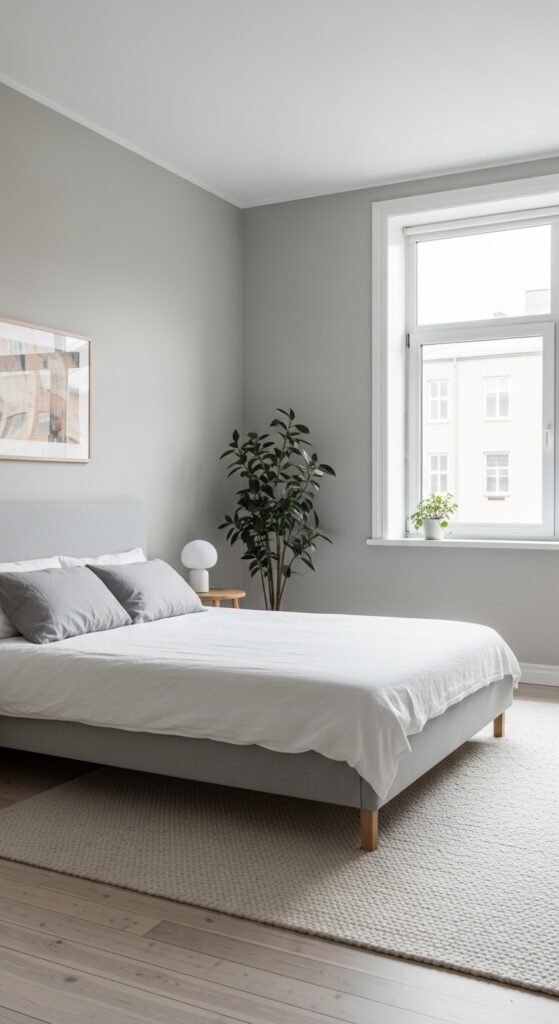
Modern bedrooms benefit from visual silence, where the room does not compete for attention. Soft neutral tones on walls and large furniture reduce visual stress and allow the mind to slow down. In apartments, where outside noise and daily activity already feel intense, this quiet foundation creates a sense of relief. The room instantly feels larger, calmer, and more breathable.
This approach supports contemporary interior balance, where design exists to support well-being. When the base feels calm, every additional element feels more meaningful. Visual silence does not mean boring; it means intentional restraint that makes the bedroom feel like a true place of rest.
Design Perspective 2: A Single Feature That Anchors the Room
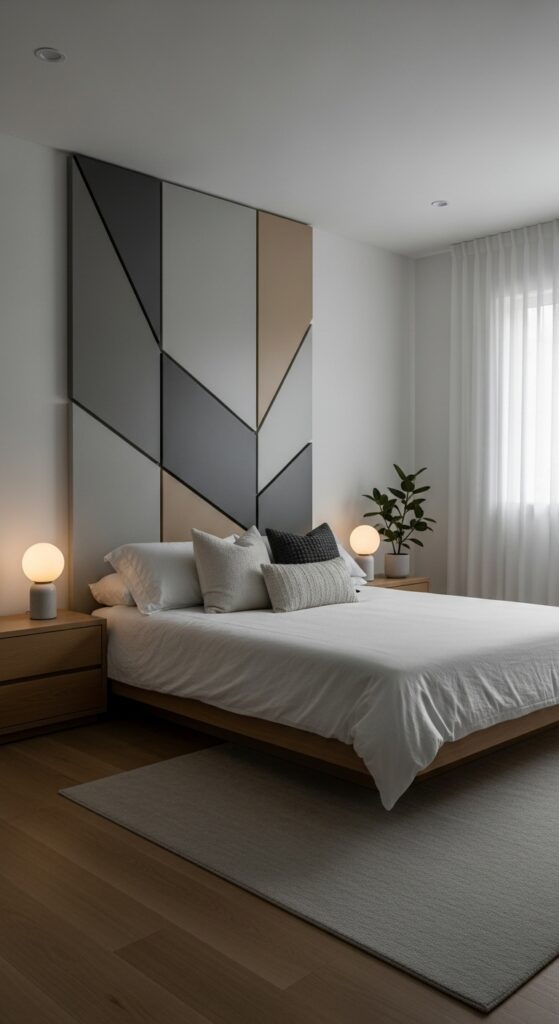
Modern bedrooms work best when one feature leads the design story. A bold headboard, textured wall, or sculptural bed frame creates focus without clutter. This approach prevents the room from feeling scattered, which is especially important in apartments with limited space. The eye knows where to land, and the room feels organized.
This design philosophy reflects intentional focal points used in modern interiors. When one element carries visual weight, the rest of the room can remain simple. This balance keeps the bedroom expressive but controlled, helping it feel curated rather than crowded.
Design Perspective 3: Lighting That Shapes Emotional Comfort
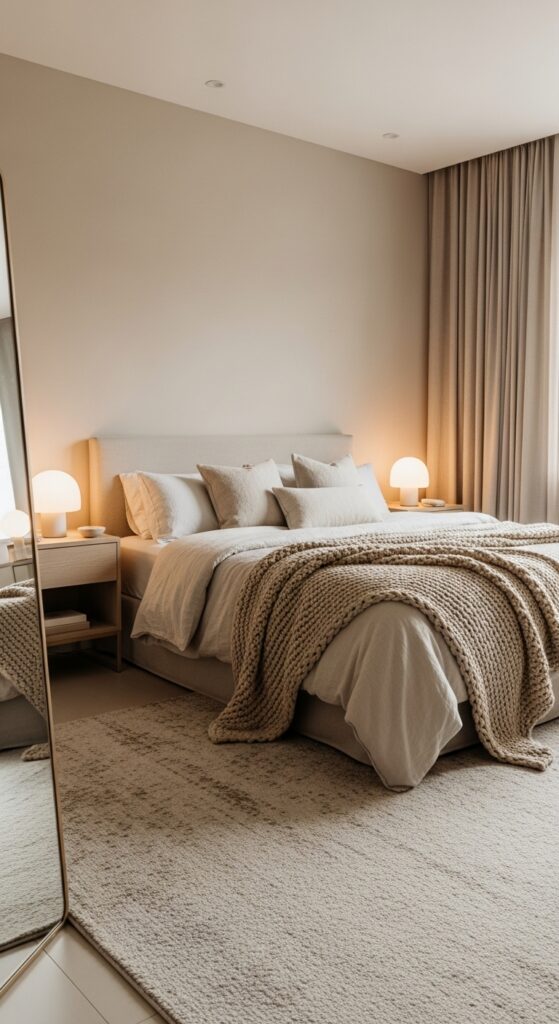
Lighting is one of the most powerful tools in modern bedroom design. Layered lighting systems allow the room to shift mood throughout the day. Soft ambient light supports relaxation, while focused bedside lighting helps with reading or winding down. This flexibility is essential in apartment bedrooms that serve multiple needs.
Well-planned lighting also enhances textures and surfaces. Fabrics look richer, walls feel warmer, and the room gains depth. Instead of relying on one harsh ceiling light, modern bedrooms use light to create comfort and emotional safety.
Design Perspective 4: Furniture That Floats and Breathes
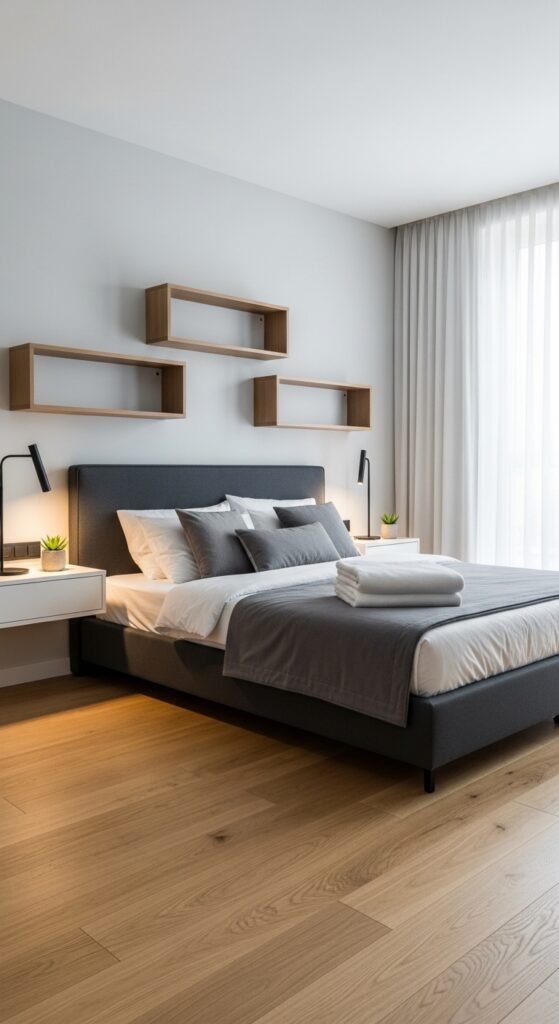
Floating furniture reduces visual weight and improves flow. Wall-mounted bedroom furniture keeps the floor clear, making the space feel lighter and more open. In apartments, this illusion of space matters as much as actual square footage. The room feels easier to move through and easier to live in.
This design choice supports space-efficient modern living. Floating elements also make cleaning simpler and reduce clutter traps. The bedroom feels intentional, calm, and visually balanced without sacrificing functionality.
Design Perspective 5: Depth Created Through Texture, Not Color

Modern bedrooms avoid loud color combinations and instead rely on textural layering. Linen bedding, wood surfaces, soft rugs, and subtle wall finishes add depth while keeping the palette calm. This creates richness without visual chaos, which is ideal for apartment spaces.
Texture makes a room feel lived-in and welcoming. It balances modern clean lines with comfort, preventing the space from feeling cold. This approach allows the bedroom to feel warm, grounded, and emotionally inviting.
Design Perspective 6: Storage That Does Not Announce Itself
Image prompt: modern apartment bedroom with concealed storage, sleek wardrobe, minimal handles
Clutter breaks modern design faster than anything else. Hidden storage solutions help maintain visual calm while supporting daily life. Built-in wardrobes, under-bed storage, and clean-front cabinets allow essentials to disappear from view.
In apartments, smart storage protects both space and mental clarity. When storage blends into the room, the bedroom feels restful instead of functional-heavy. This supports modern living where design serves the person, not the other way around.
Design Perspective 7: One Color Family, Multiple Layers

Using variations of one color creates harmony. Monochrome bedroom styling allows the room to feel cohesive while still having depth. Different shades, finishes, and fabrics prevent the space from feeling flat.
This approach reduces decision fatigue and visual tension. It aligns with modern design values that prioritize calm, balance, and consistency, especially important in apartment bedrooms meant for rest.
Design Perspective 8: Art That Feels Chosen, Not Added
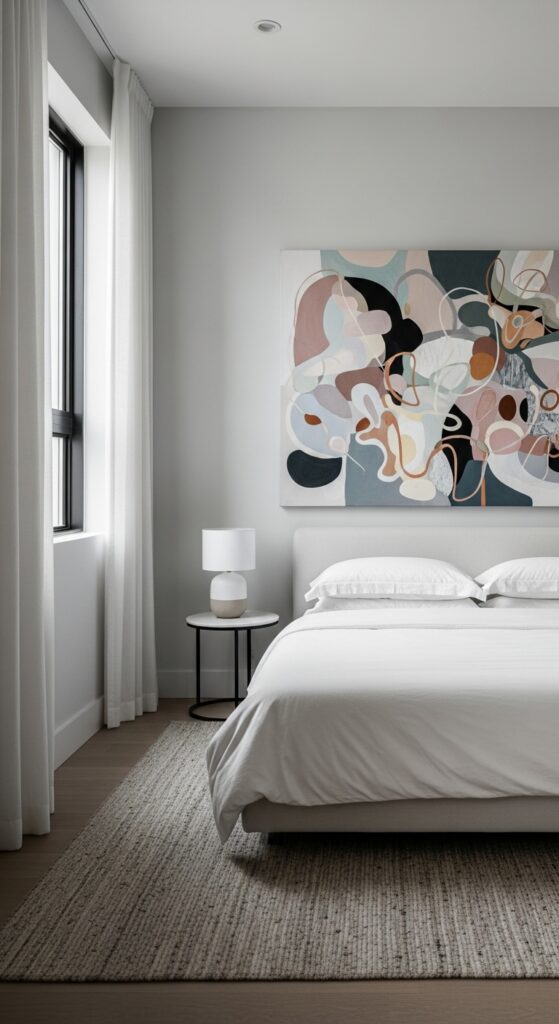
Art in a modern bedroom should feel intentional. Statement wall art works best when it stands alone and has room to breathe. One meaningful piece adds personality without cluttering the walls or overwhelming the space.
This approach allows art to connect emotionally with the room. It becomes part of the design language instead of decoration, supporting a modern aesthetic that values clarity and purpose.
Design Perspective 9: Lower Profiles for a Grounded Feel
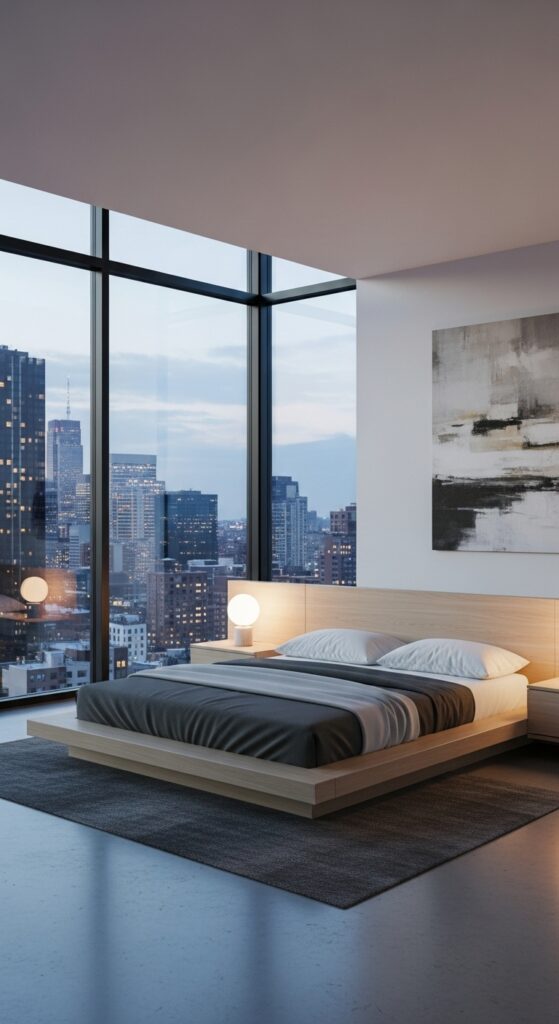
Low-profile furniture helps rooms feel grounded and open. Platform beds and low seating emphasize horizontal lines, which visually widen the space. In apartments with standard ceiling heights, this trick makes the room feel more expansive.
This grounded layout also supports relaxation. The bedroom feels calm, stable, and comfortable, aligning with modern principles that focus on proportion and emotional ease.
Design Perspective 10: Natural Materials That Restore Balance

Natural materials bring humanity into modern spaces. Organic textures and finishes like wood, linen, and cotton soften clean lines and add warmth. These materials connect the room to nature, even in urban apartments.
They also age beautifully, making the design feel timeless. Natural elements support a bedroom that feels authentic, comforting, and easy to live with over time.
Design Perspective 11: Corners That Create Daily Rituals
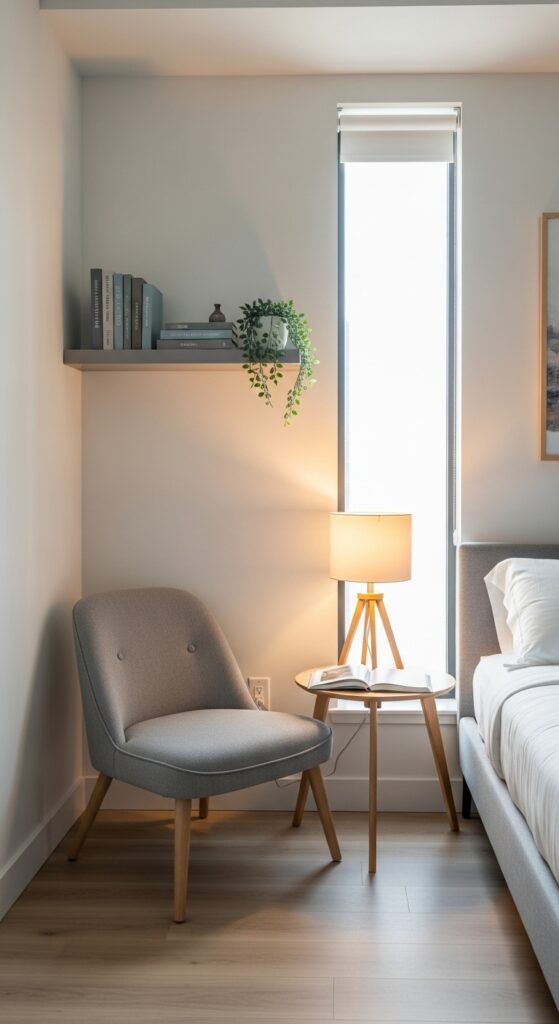
Modern bedrooms work best when they support small daily rituals. A quiet corner with a chair or bench creates a place to read, journal, or simply pause. In apartments, these moments matter because the bedroom often becomes the only private retreat. This corner adds emotional value without demanding much space or furniture.
This idea reflects intentional space planning, where design supports behavior. When a bedroom offers more than sleep, it feels more personal and complete. The room begins to support mental rest, not just physical rest.
Design Perspective 12: Soft Shine That Elevates the Ordinary

A touch of shine adds refinement when used carefully. Subtle metallic accents like brushed brass or matte black introduce contrast and light reflection without overpowering the room. In modern bedrooms, these details work best in lighting fixtures, handles, or small decor items.
The key is restraint. When metallics appear sparingly, they elevate the design and add polish. This creates a bedroom that feels thoughtful and modern, not flashy or trend-driven.
Design Perspective 13: Window Styling That Changes Proportions
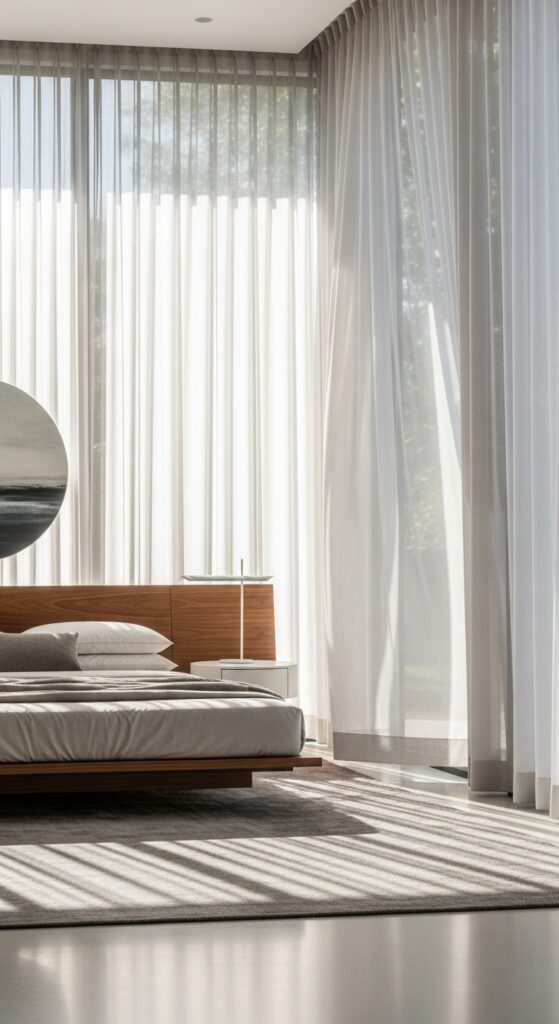
Windows influence how a bedroom feels more than most people realize. Full-height curtain styling draws the eye upward, making the room appear taller and more open. This is especially effective in apartments with standard ceiling heights.
Sheer fabrics allow light to flow while adding softness and privacy. This simple change can transform the room’s proportions and atmosphere without any renovation or permanent alteration.
Design Perspective 14: Technology That Stays Visually Quiet
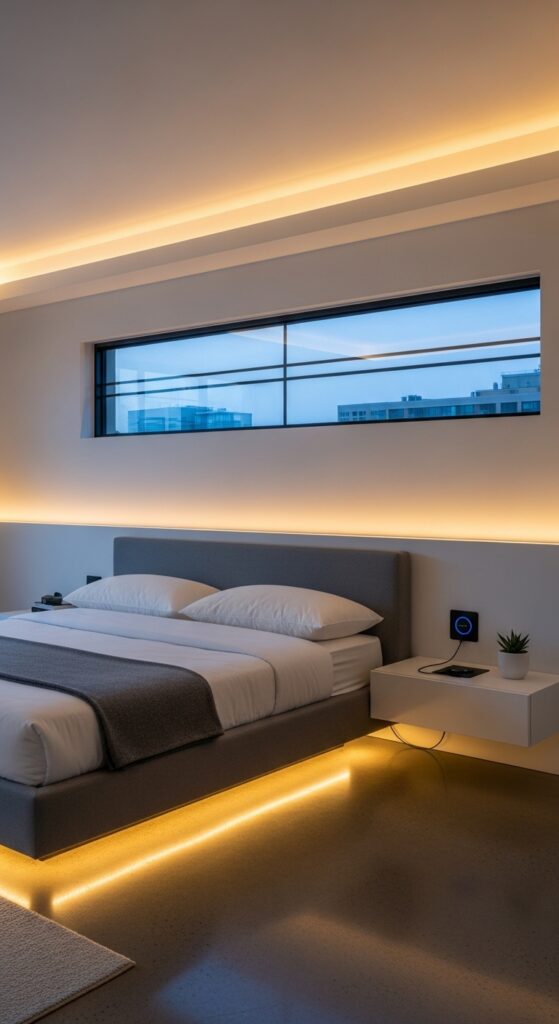
Modern bedrooms often include technology, but it should never dominate the space. Integrated smart features like hidden charging points or app-controlled lighting improve comfort without visual noise. The goal is convenience that feels invisible.
When technology blends into the design, the bedroom remains calm and restorative. This balance supports modern living while protecting the room’s emotional purpose as a place of rest.
Design Perspective 15: Soft Surfaces That Anchor the Layout
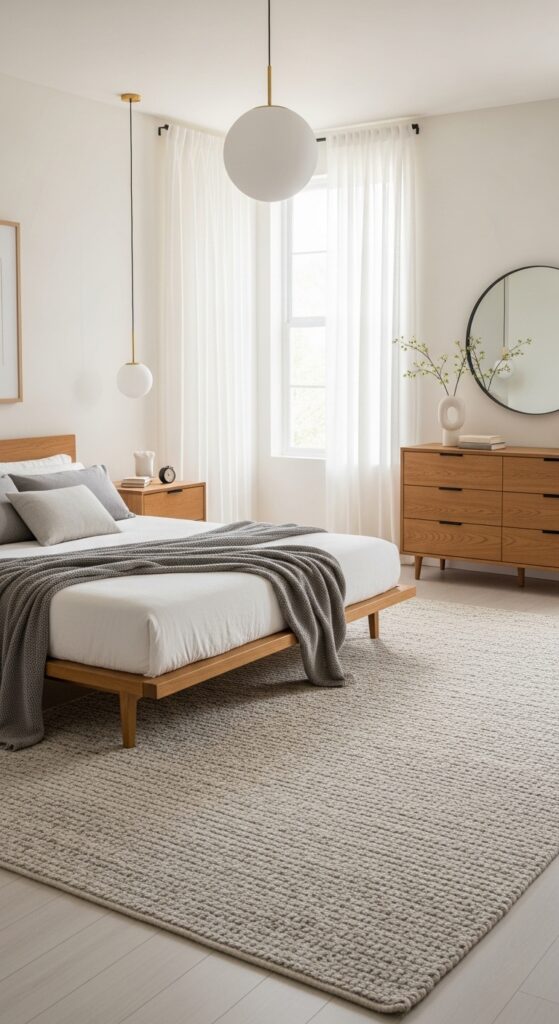
A rug grounds the bedroom and defines the sleeping area. Bedroom area rugs add warmth underfoot and soften hard flooring, which is common in apartments. They also help reduce noise and echo, improving comfort.
In modern spaces, rugs work best when they stay neutral and textured rather than busy. This keeps the room cohesive while adding physical and visual comfort.
Design Perspective 16: Shelving Styled With Discipline
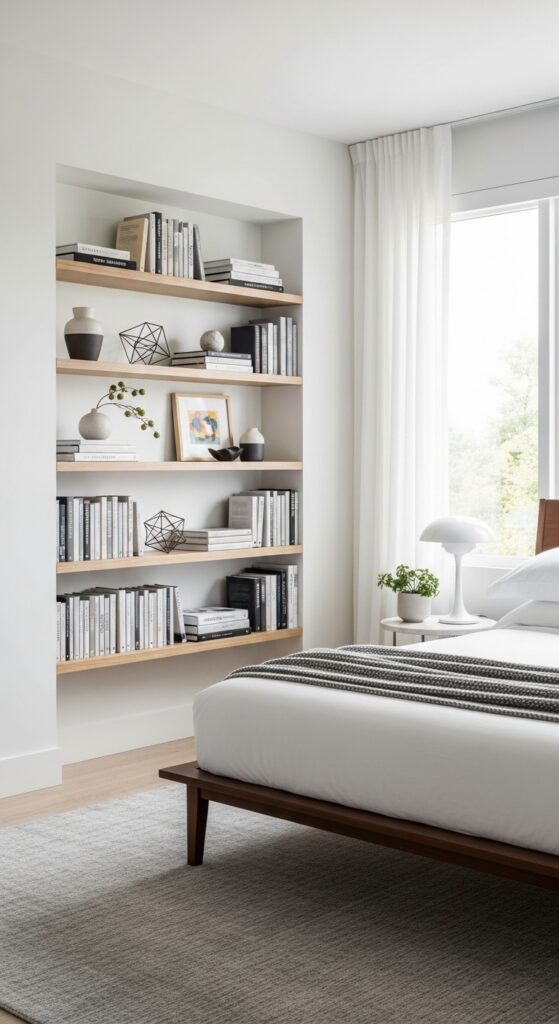
Open shelving can quickly feel cluttered if not handled carefully. Curated shelf styling focuses on fewer items with meaning, allowing each object space to breathe. Books, ceramics, or plants work best when grouped thoughtfully.
This approach keeps the bedroom expressive without chaos. The shelves feel intentional, personal, and aligned with modern simplicity rather than decorative overload.
Design Perspective 17: Green Elements That Calm the Space
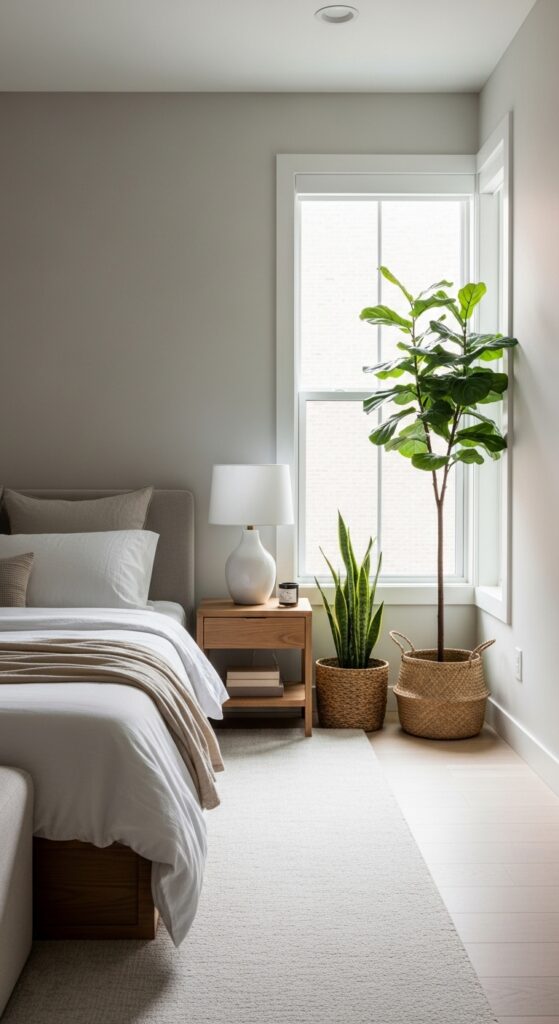
Plants bring life and balance into modern bedrooms. Indoor greenery styling softens clean lines and introduces organic shapes that calm the mind. Even a single plant can change the emotional tone of a room.
Green elements also improve air quality and visual comfort. They connect the bedroom to nature, which is especially valuable in urban apartment living.
Design Perspective 18: Bedding That Signals Rest and Comfort
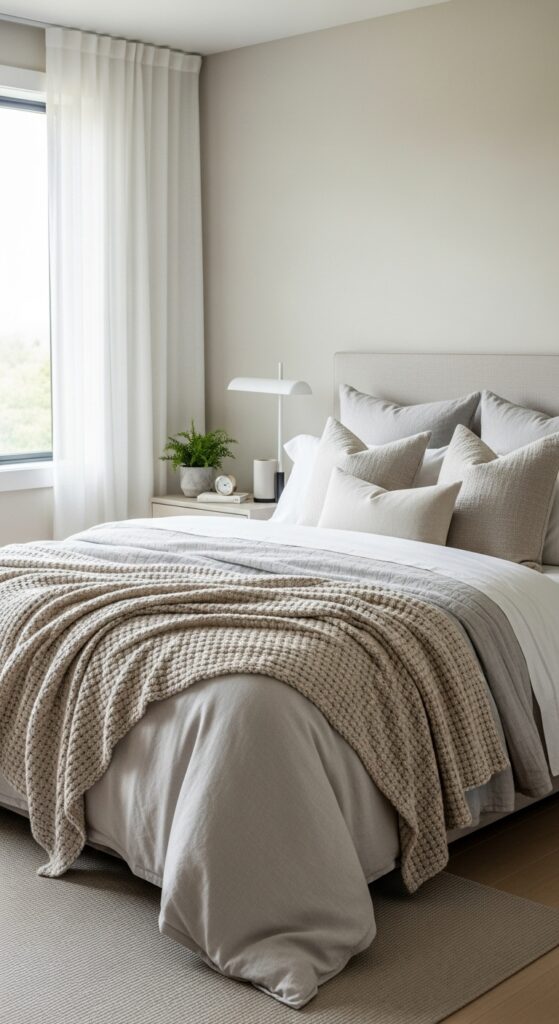
The bed sets the emotional tone of the entire room. Layered bedding design using soft textures and neutral tones creates comfort without excess. Thoughtful layering makes the bed look inviting and lived-in rather than styled for display.
When bedding feels generous and soft, the bedroom immediately feels more restful. This supports better sleep and a stronger sense of retreat.
Design Perspective 19: Light Fixtures That Free the Surface
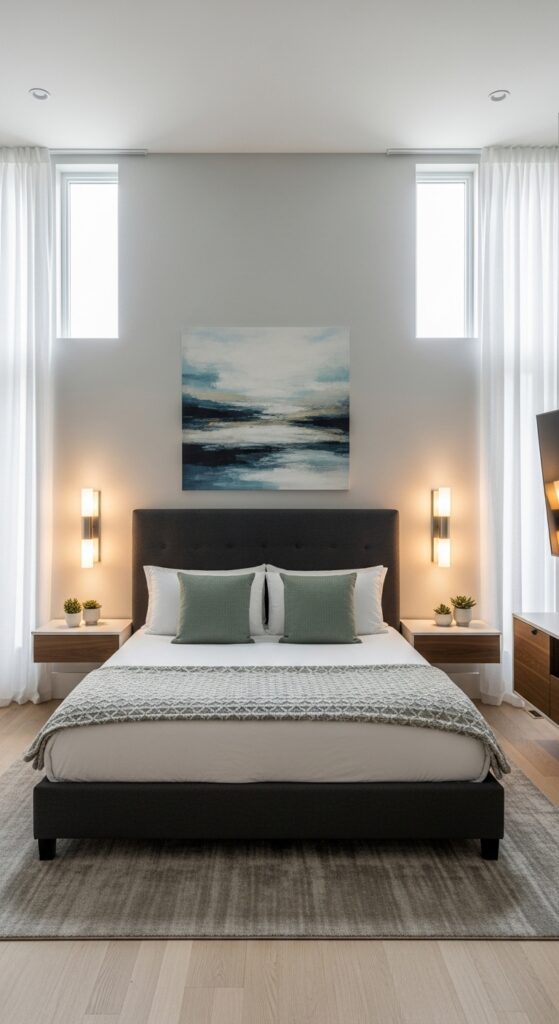
Wall-mounted lighting keeps surfaces clear and the layout clean. Modern wall sconces provide focused light while freeing nightstands from clutter. This is especially helpful in smaller apartment bedrooms.
These fixtures also improve symmetry and balance. When lighting feels intentional, the room feels more refined and visually organized.
Design Perspective 20: Personal Meaning Without Visual Noise
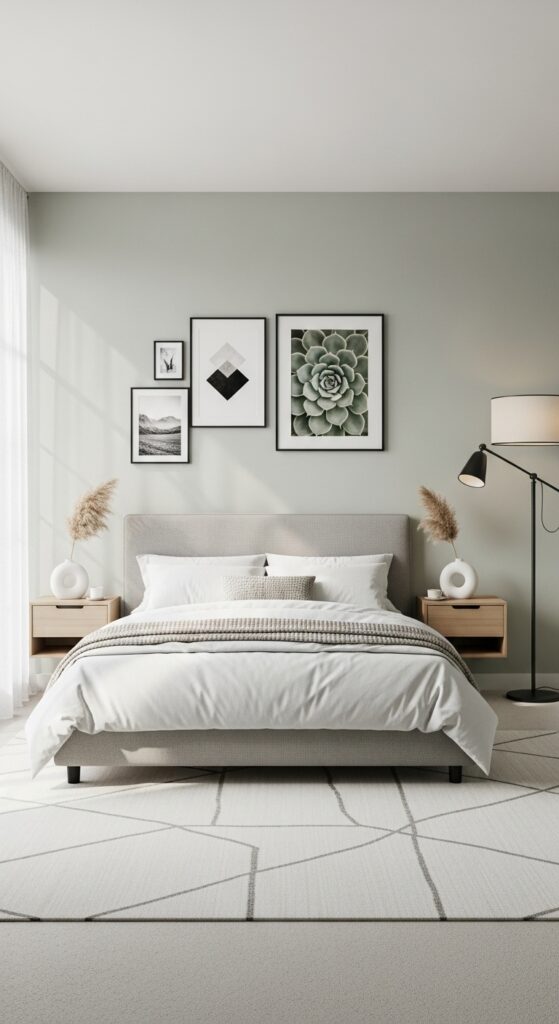
Personal items make a bedroom feel human, but too many can overwhelm the space. Meaning-driven decor works best when limited to a few well-chosen pieces. Framed memories or objects with stories add warmth without clutter.
This restraint allows personality to shine while preserving calm. The bedroom feels authentic, not crowded, and emotionally supportive.
Conclusion
A modern apartment bedroom succeeds when every choice supports comfort, clarity, and daily life. By focusing on balance, texture, proportion, and intention, you can create a space that feels calm and deeply personal. Modern design is not about trends, but about how a room serves you emotionally and practically. When design respects both space and people, even the smallest apartment bedroom becomes a meaningful retreat.