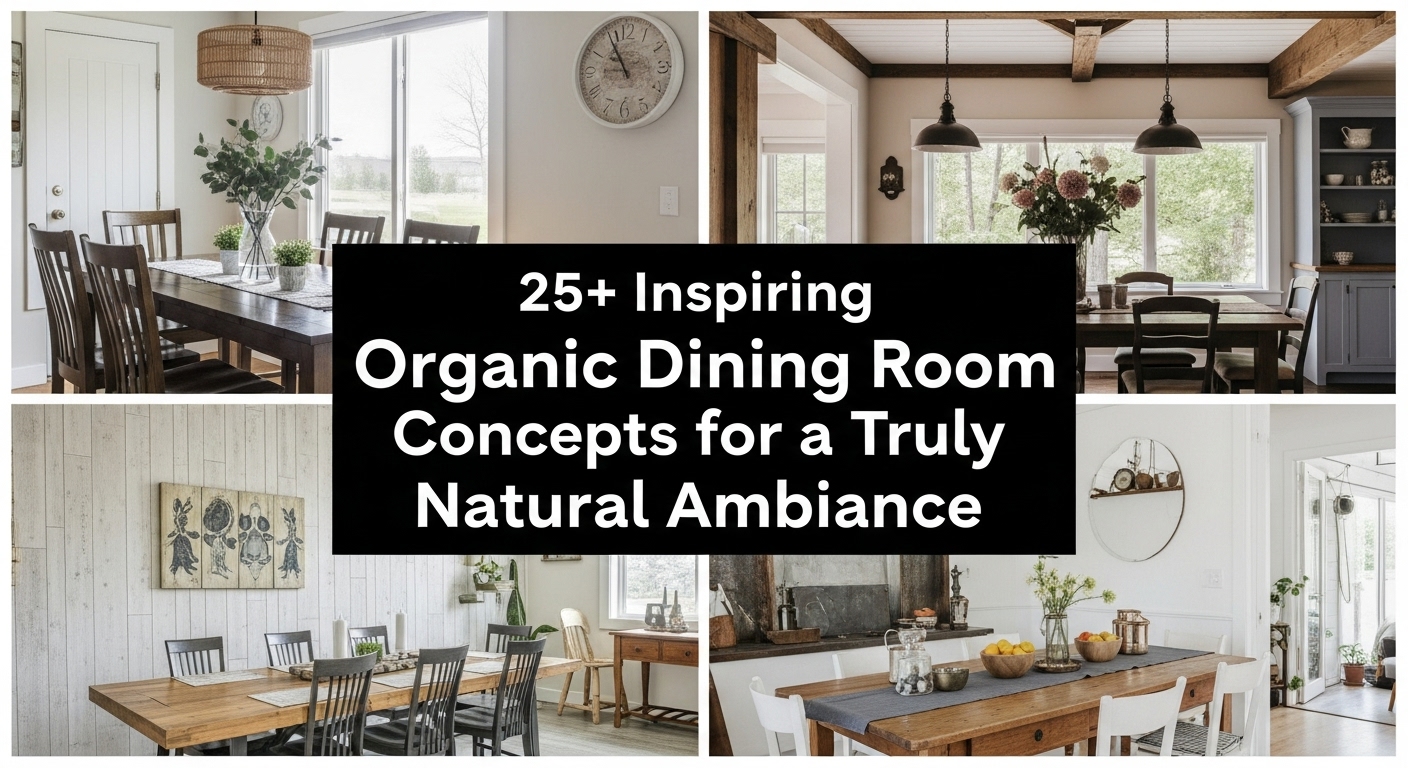
25+ Inspiring Organic Dining Room Concepts for a Truly Natural Ambiance
Introduction
Organic dining rooms speak to comfort, authenticity, and a deep connection with nature. These concepts focus on natural materials, earth-driven palettes, and mindful design choices that make everyday meals feel grounded and intentional. Below, each idea blends visual warmth with functional beauty, helping homeowners create spaces that feel calm, personal, and timeless while aligning with organic interior design principles.
Section One: Grounded Foundations of Organic Dining
1 Organic Shapes that Soften the Space
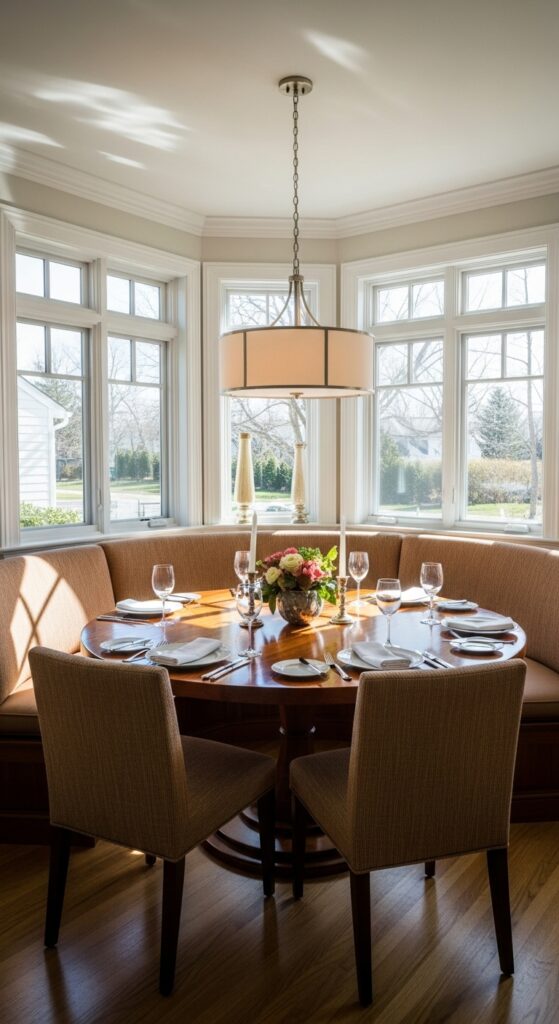
Organic shapes soften rigid layouts and introduce flow. Round tables, curved chairs, and arched details echo natural forms, helping the dining room feel more intuitive and welcoming. This supports natural dining room aesthetics focused on comfort.
Curves also encourage conversation by removing sharp boundaries. The space feels inclusive and relaxed, reinforcing emotional connection and ease during shared meals.
2. Solid Wood Dining Tables as a Natural Anchor
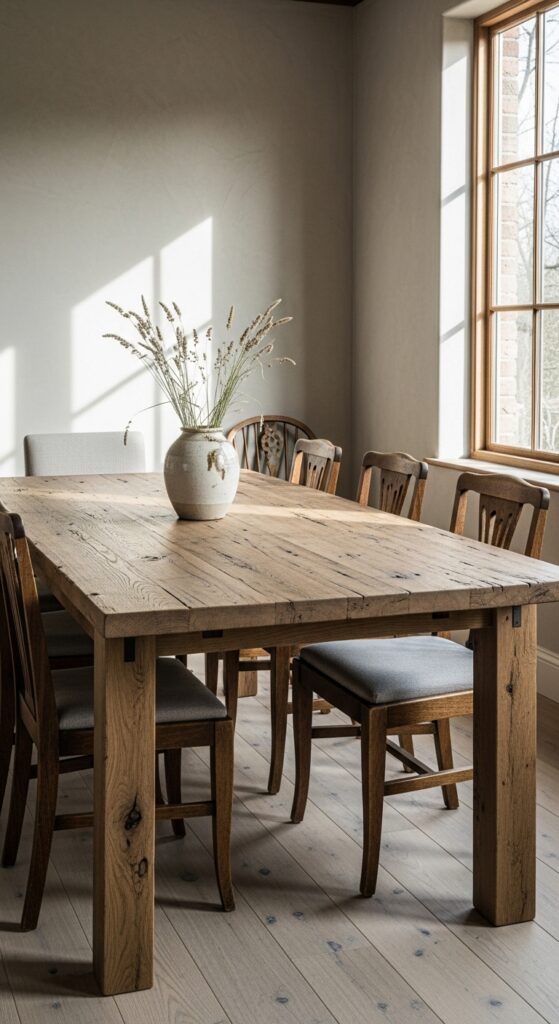
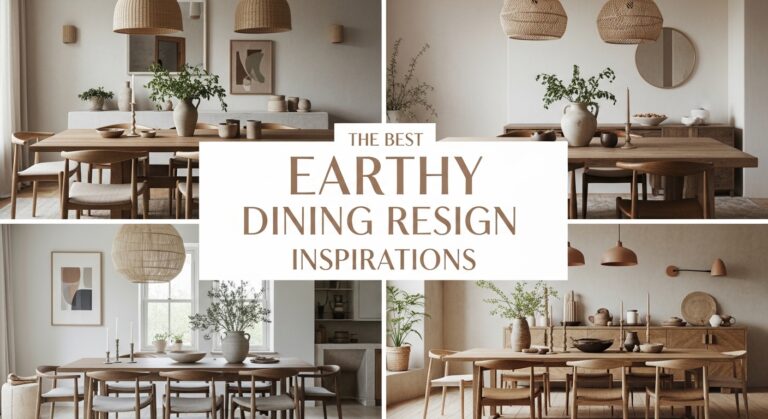
A solid wood dining table acts as the emotional and visual anchor of an organic dining room. Natural grain patterns, knots, and tonal variation bring warmth and depth that manufactured materials cannot replicate. Whether crafted from oak, walnut, or reclaimed timber, wood aligns naturally with sustainable interior design while offering strength and longevity for daily use.
Designing the room around a wood table allows supporting elements to remain understated. Neutral walls, simple seating, and soft lighting highlight the table’s character. Over time, wear marks add story rather than damage. This evolving beauty supports organic living spaces that feel honest, grounded, and deeply connected to everyday life.
3. Earth-Toned Color Palettes for Calm Dining Spaces

Earth-toned color palettes create immediate emotional calm within dining spaces. Shades inspired by soil, stone, and foliage help the room feel grounded and familiar. When applied across walls, textiles, and decor, these tones reinforce biophilic interior design by echoing outdoor environments indoors without visual heaviness.
These colors also support long-term flexibility. Earth tones adapt easily to seasonal styling and evolving furniture choices. Instead of dominating the space, they quietly support natural materials like wood and linen. This balance keeps the dining room visually soothing and emotionally welcoming.
4. Linen and Cotton Textiles for Soft Organic Texture
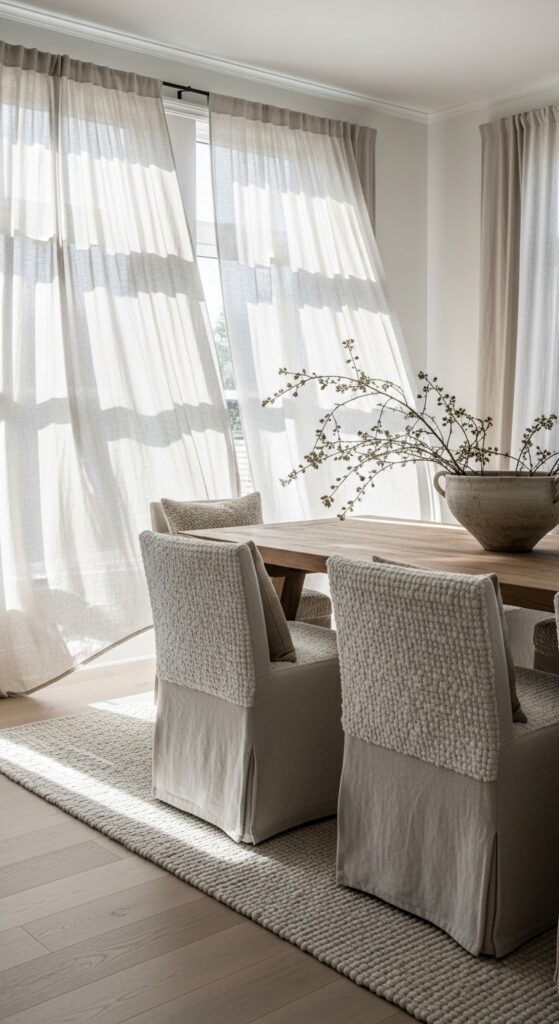
Natural textiles play a quiet but powerful role in organic dining rooms. Linen tablecloths, cotton cushions, and breathable curtains soften hard surfaces while adding warmth. Their subtle wrinkles and matte finishes bring authenticity, supporting natural interior styling that feels lived-in rather than staged.
Beyond appearance, these materials improve comfort and air quality. Linen and cotton regulate temperature and allow better airflow. When layered thoughtfully, textiles introduce gentle movement and acoustic softness, helping the dining room feel calm, welcoming, and human-centered.
5. Purposeful Minimal Decor for Visual Balance
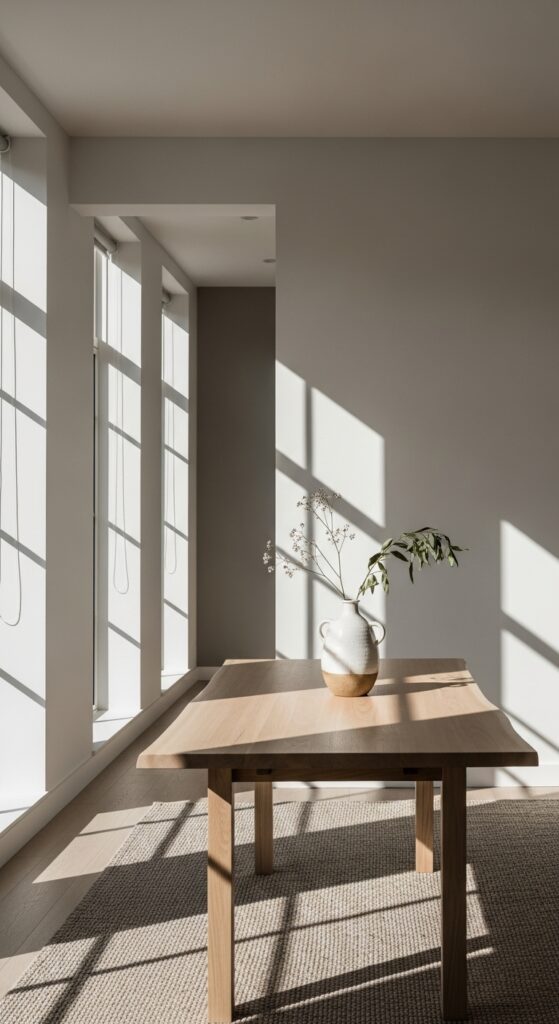
Organic dining rooms thrive on decor that feels intentional rather than excessive. A single handcrafted object can hold more meaning than multiple decorative pieces. This restraint allows materials, form, and texture to stand out, reinforcing mindful interior design principles that prioritize clarity and calm.
Purposeful decor also reduces mental clutter. Each object serves a function or tells a story, supporting a more focused dining experience. By editing rather than adding, the space feels balanced and emotionally lighter, allowing connection and presence to guide the dining experience.
6. Natural Light as a Core Design Element
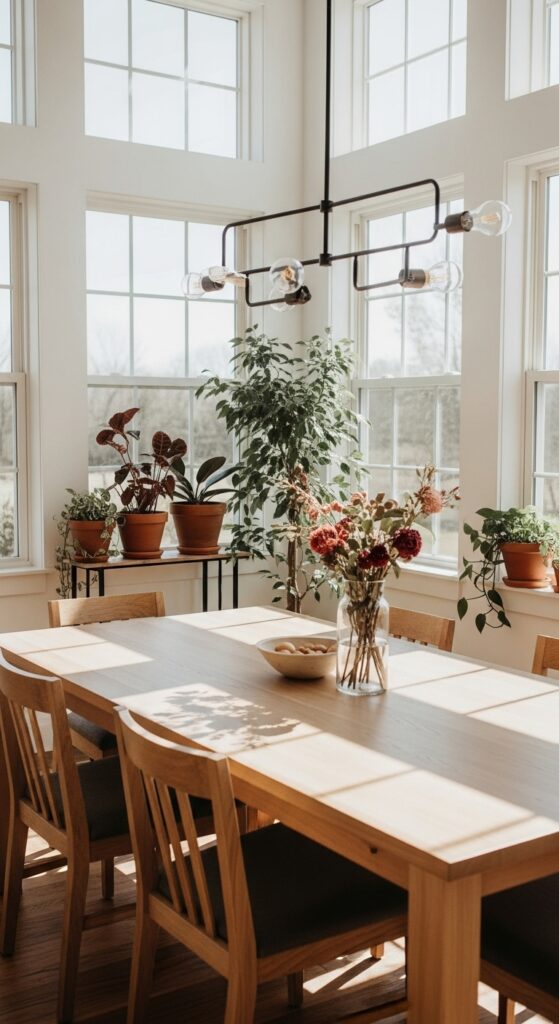
Natural light transforms how an organic dining room feels throughout the day. Sunlight enhances wood grain, reveals fabric texture, and adds warmth without artificial effort. Large windows or sheer curtains strengthen the connection between indoor and outdoor spaces, reinforcing natural dining room aesthetics.
Designing around daylight also supports sustainable living. Reduced reliance on artificial lighting improves energy efficiency and well-being. When light becomes part of the design, the dining room feels alive, dynamic, and in sync with natural rhythms.
7. Handcrafted Furniture with Human Character
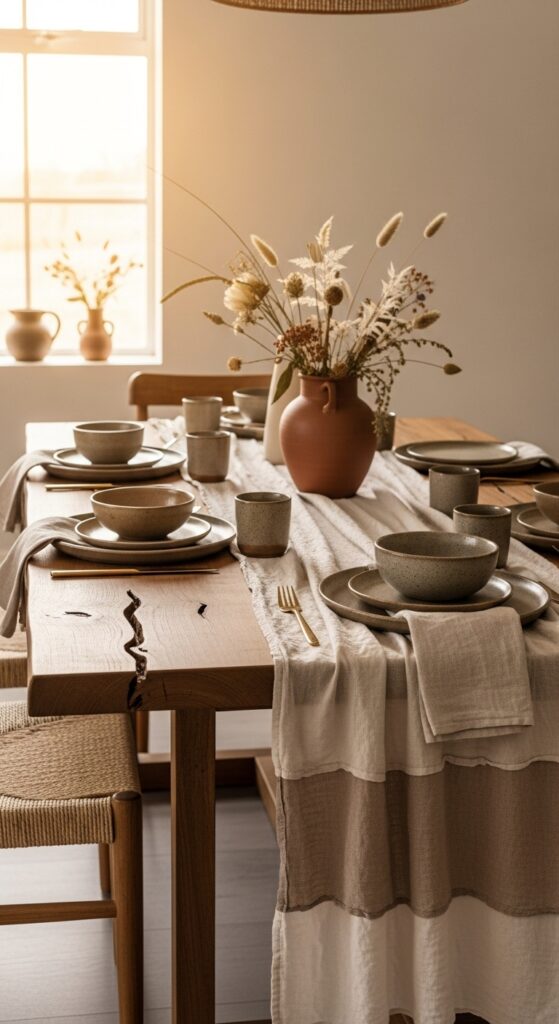
Handcrafted furniture introduces visible human presence into the dining room. Subtle variations in shape and finish reveal the maker’s hand, adding warmth and soul. These details separate organic interiors from mass-produced spaces, aligning with human-centered interior design values.
Choosing handcrafted pieces also supports sustainability and longevity. Quality craftsmanship ensures durability while reducing waste. Over time, these items become meaningful anchors, reinforcing the emotional depth of an organic dining room.
8. Indoor Plants as Living Design Elements
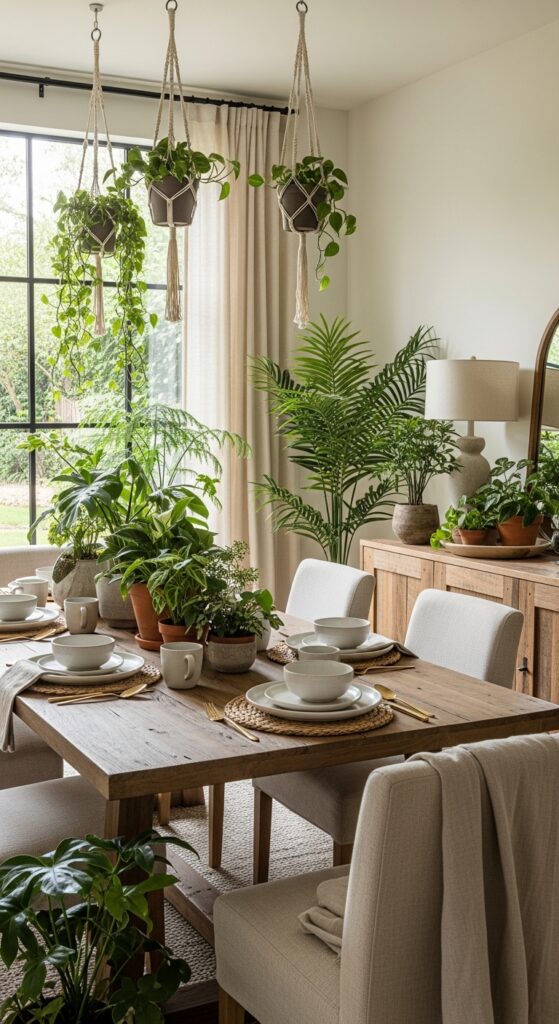
Plants bring vitality and softness into dining spaces. Their organic forms contrast with furniture lines, adding movement and freshness. Even one well-placed plant can shift the emotional tone of the room toward calm and renewal.
Beyond aesthetics, plants support air quality and emotional well-being. Caring for them encourages mindfulness and routine. In biophilic interiors, greenery acts as living decor that evolves over time, keeping the dining room connected to nature.
9. Stone and Clay Accents for Earthy Grounding

Stone and clay accents add visual weight and grounding to organic dining rooms. Their raw textures and matte finishes create contrast against wood and linen, reinforcing a connection to the earth. These materials support earth-inspired interior design by introducing permanence and quiet strength without overwhelming the space.
Clay and stone also age beautifully. Small chips, tonal shifts, and surface variations enhance character rather than reduce value. When used thoughtfully, these accents bring balance and authenticity, making the dining room feel rooted and timeless.
10. Layered Wood Tones for Natural Harmony
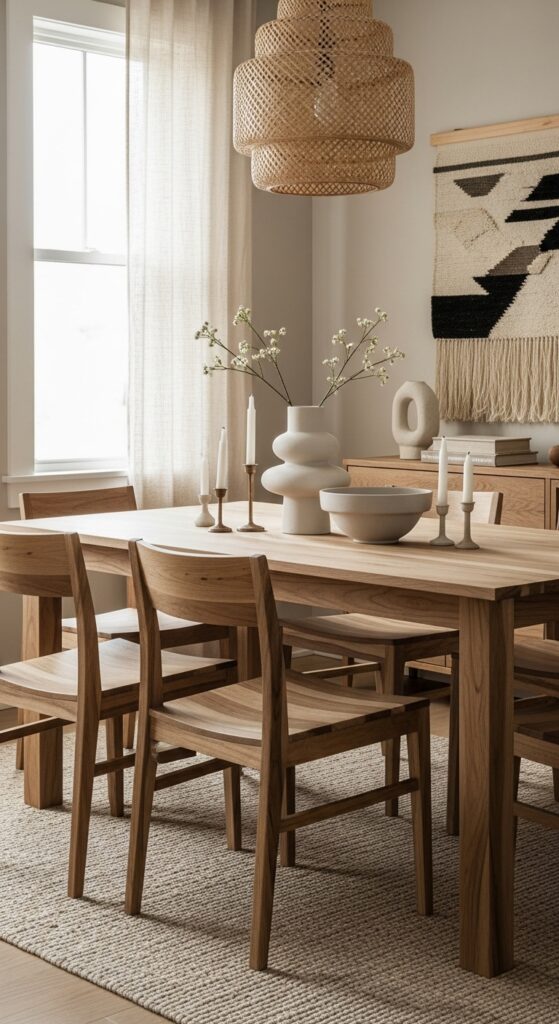
Layering different wood tones adds depth without visual chaos when undertones align. Light, medium, and warm woods can coexist naturally, creating richness while maintaining harmony. This approach supports organic interior design by avoiding flat or overly matched spaces.
Wood layers also create warmth and continuity across furniture and architectural elements. When thoughtfully combined, they guide the eye smoothly through the room, making the dining space feel cohesive and intentionally designed.
11. Open Shelving with Curated Everyday Pieces
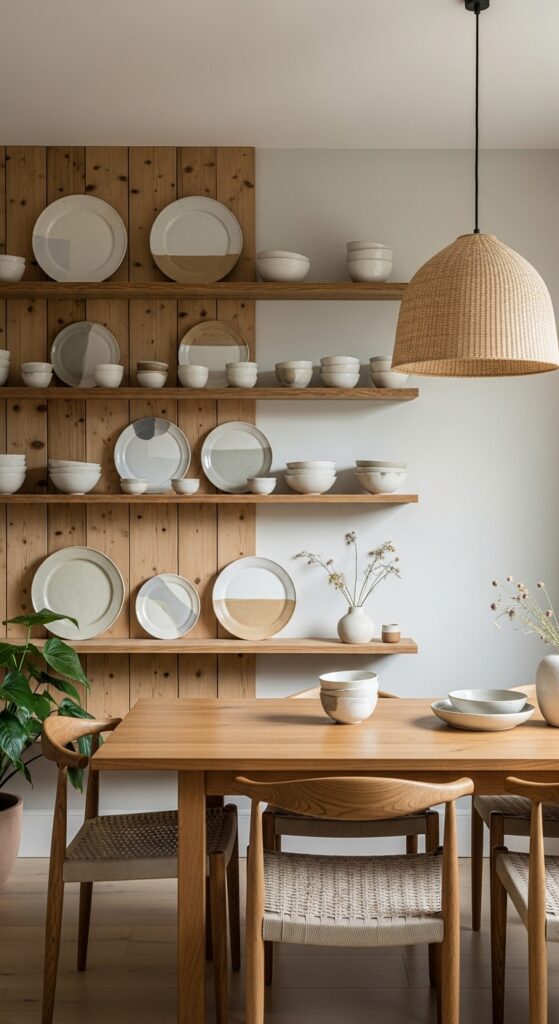
Open shelving allows everyday dining items to become part of the visual story. Plates, bowls, and glassware add texture and rhythm when displayed intentionally. This approach supports natural dining room styling by blending function with beauty.
Curated shelving also encourages mindful ownership. When items remain visible, quality and usefulness matter more than quantity. This reduces clutter while making the dining room feel accessible, personal, and lived-in.
12. Soft, Diffused Lighting for Evening Dining
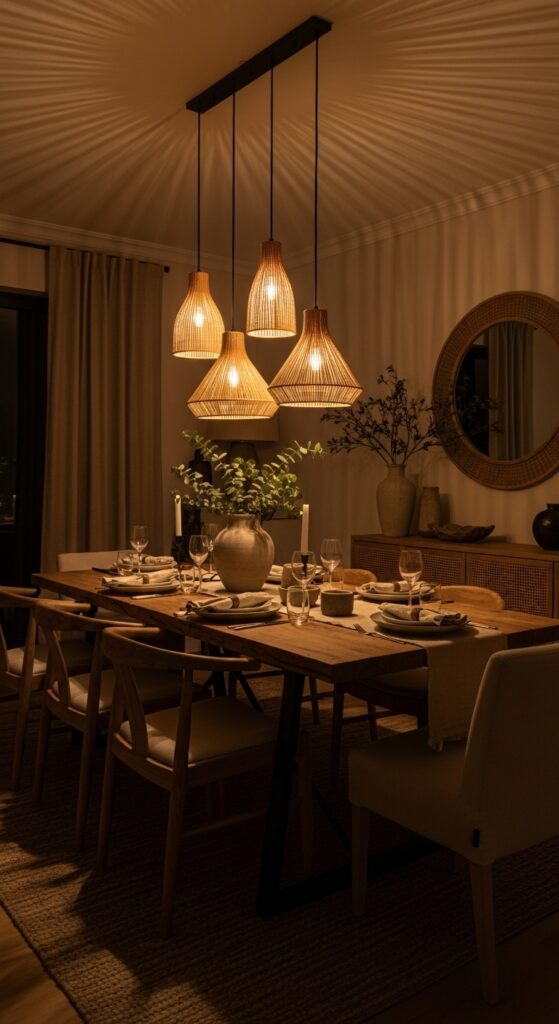
Lighting shapes emotional experience. Soft, diffused lighting creates intimacy and comfort during evening meals. Warm tones enhance natural materials, making wood and textiles feel richer and more inviting, which aligns with wellness-focused interiors.
Avoiding harsh overhead light allows the dining room to feel relaxed and human. Layered lighting options support different moods, from quiet dinners to social gatherings, without disrupting visual calm.
13. Neutral Wall Colors that Support Materials
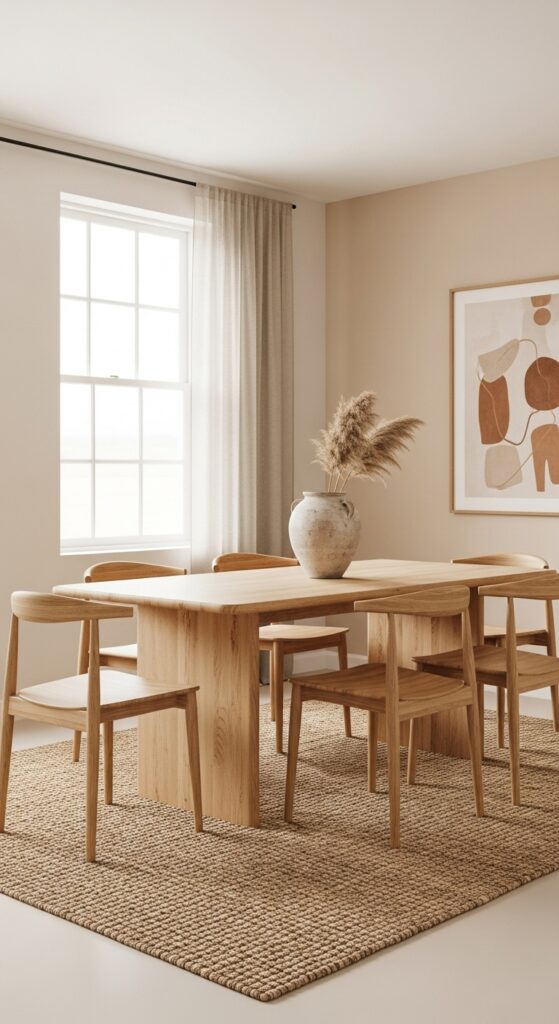
Neutral walls provide breathing room for organic materials to shine. Soft whites, warm beiges, and gentle taupes reflect light while highlighting texture instead of competing for attention. This supports natural interior styling focused on balance.
Neutral backdrops also future-proof the space. They adapt easily to changing decor, seasonal accents, or evolving personal taste. The dining room remains timeless and flexible.
14. Mixed Seating for Relaxed Authenticity
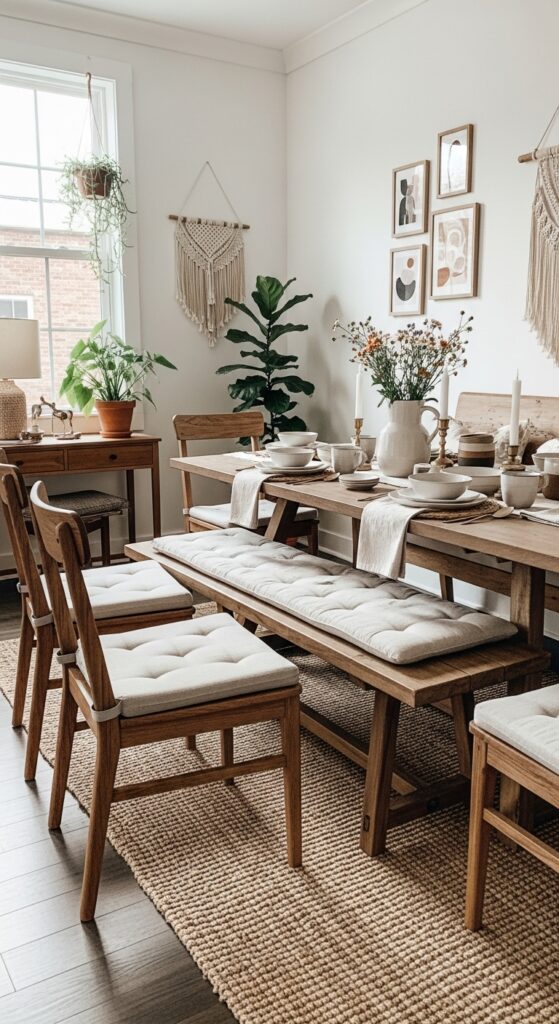
Mixed seating introduces a collected, organic feel that avoids uniformity. Combining chairs and benches adds visual interest while maintaining comfort. This approach reflects human-centered design, where function and flexibility matter.
Different seating types also support varied social dynamics. Benches encourage closeness, while chairs provide structure. Together, they create a welcoming environment suited for everyday meals and gatherings alike.
15. Sustainable Materials with Long-Term Value
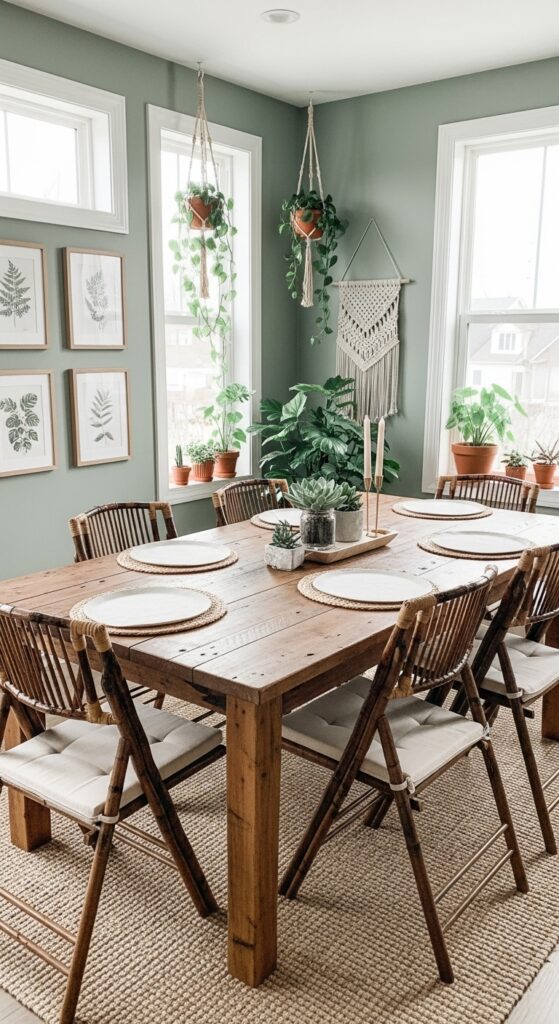
Sustainable materials bring ethical intention into dining room design. Reclaimed wood, bamboo, and responsibly sourced materials reduce environmental impact while offering durability and texture. This aligns with eco-conscious interior design values.
These materials often improve with age, developing character rather than wearing out. Choosing sustainability supports long-term living rather than short-term trends, making the dining room feel responsible and refined.
16. Lighting That Encourages Long Conversations
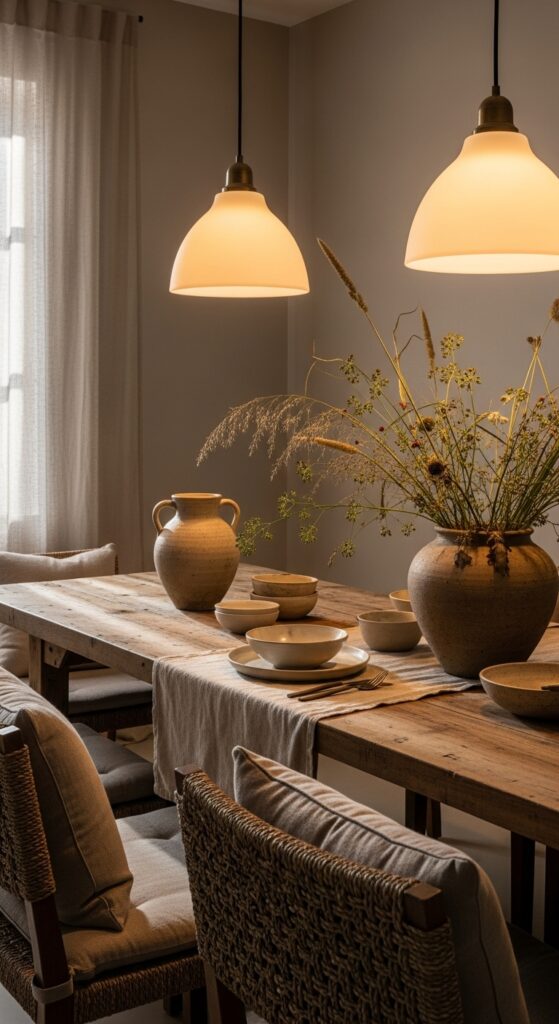
Lighting shapes the mood and rhythm of organic dining rooms. Warm, diffused light encourages relaxation and draws focus to the table’s natural materials. Pendant lights over wood tables or soft wall sconces support a human-centered dining experience while highlighting textures like linen, ceramics, and grain patterns. Good lighting fosters connection, making shared meals more intimate and inviting.
Strategic placement avoids harsh overhead illumination, allowing the room to feel soft yet alive. Layering light sources ensures flexibility for morning brunch or evening dinners. This approach aligns with organic dining room aesthetics, creating an environment that encourages conversation and presence.
17. Walls That Step Back and Let Texture Lead
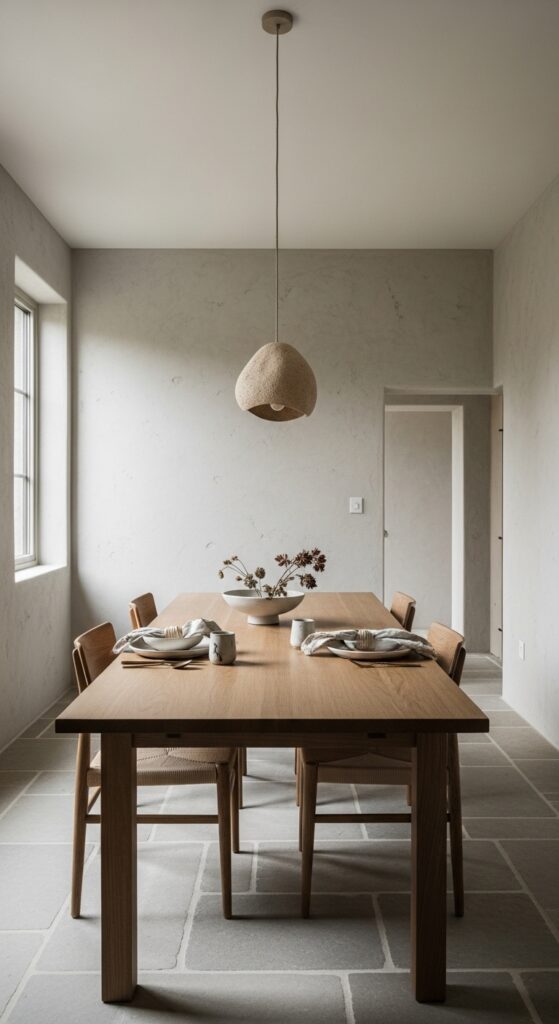
Neutral, textured walls provide a backdrop that highlights organic materials rather than competing with them. Soft plaster, clay, or muted paint tones allow wood, stone, and textiles to stand out, supporting natural dining room design. The walls quietly shape the room’s atmosphere without dominating the space.
A textured wall also introduces tactile richness that appeals to sight and touch. Subtle imperfections create warmth and authenticity, making the dining room feel approachable and lived-in. By letting materials lead visually, the room achieves balance and organic cohesion.
18. Seating That Feels Gathered, Not Matched
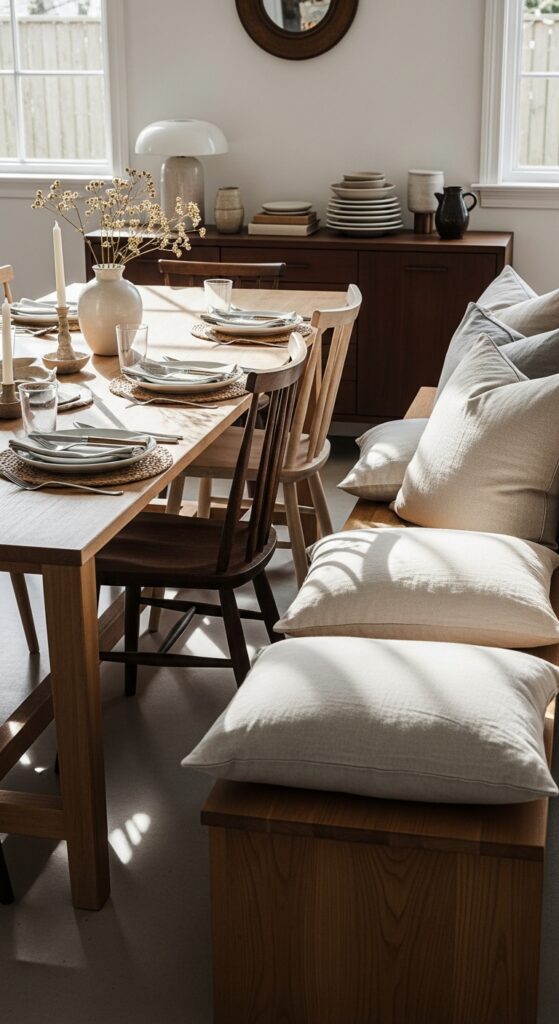
Mixing seating types—chairs, benches, or stools—creates a collected, informal feel that enhances organic living spaces. It encourages flexibility, comfort, and conversation while avoiding rigid symmetry. The visual rhythm of mismatched wood tones or fabrics adds warmth and character.
Curated variety in seating also supports daily usability. Benches can accommodate family or guests, while individual chairs maintain structure. This approach reinforces human-centered dining design, allowing the room to feel inviting, adaptable, and authentically organic.
19. Choosing Materials That Respect Time and Nature

Selecting sustainable, long-lasting materials strengthens both aesthetic and environmental value. Reclaimed wood, bamboo, and ethically sourced textiles support eco-conscious interior design and provide durability that improves over time. The aging of natural materials adds story and character.
Using materials that respect time also reduces unnecessary replacement and clutter. Natural surfaces like wood grain, stone veining, and linen patina deepen with use, maintaining organic dining room aesthetics while fostering mindfulness about long-term living.
20. Curves That Make the Room Feel Human
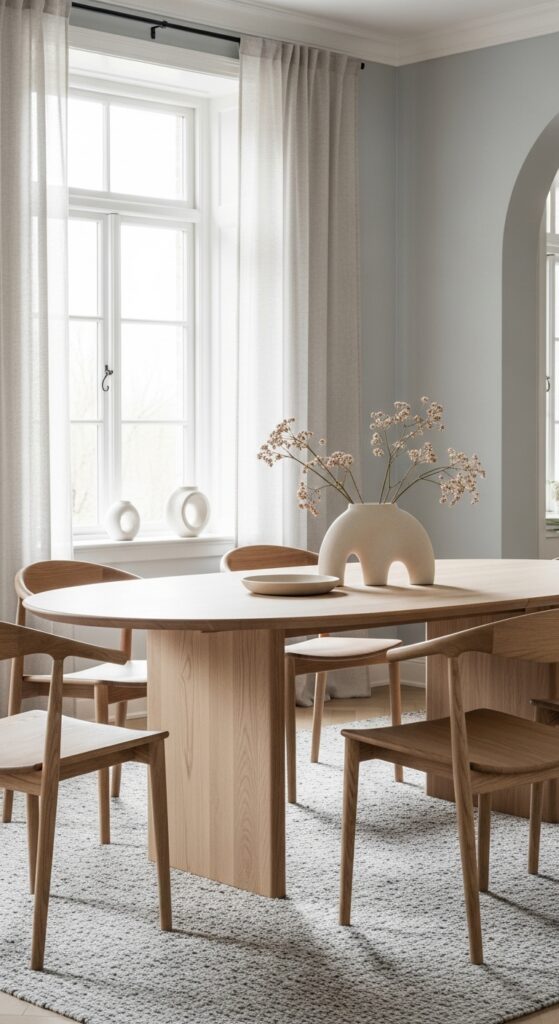
Rounded tables, arched chairs, and soft curves make a dining room feel approachable and human. Organic shapes reduce rigidity and create natural flow, supporting human-first interior design. Curves invite movement and interaction, softening the visual experience while balancing structured furniture lines.
Curved furniture also improves social dynamics at the table. Round or oval tables encourage eye contact, intimate conversations, and a sense of inclusion. This subtle design choice reinforces natural dining room design while enhancing comfort and connection.
21. Grounding the Space From the Floor Up
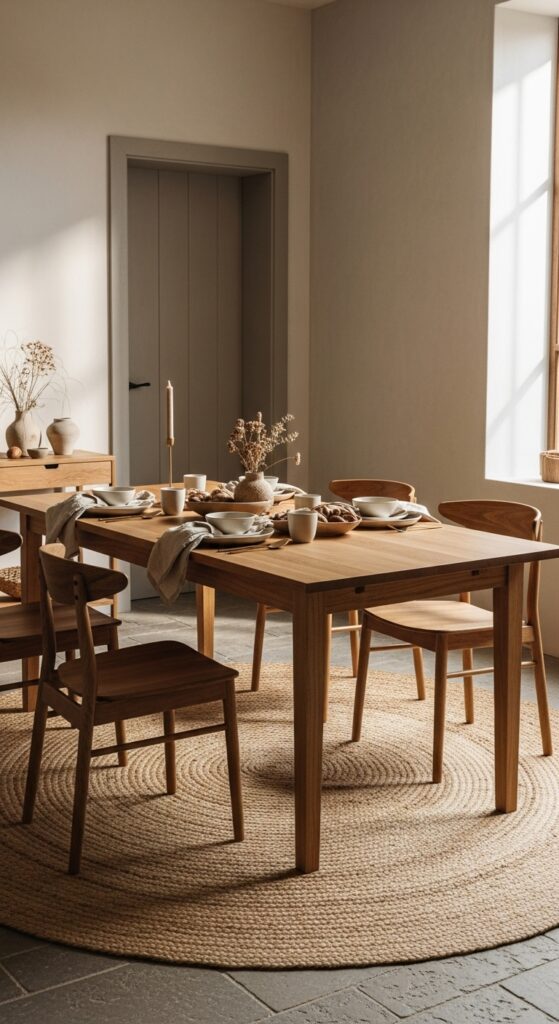
A textured rug anchors the dining area visually and physically. Materials like jute, sisal, or wool enhance organic dining room aesthetics while softening movement and sound. Rugs define the dining space in open layouts and add grounding warmth underfoot.
Layering textures from floor to tabletop creates balance and depth. The rug works with furniture and textiles to create a calm, cohesive environment that feels comfortable, natural, and intentionally designed.
22. Patterns That Whisper Instead of Shout
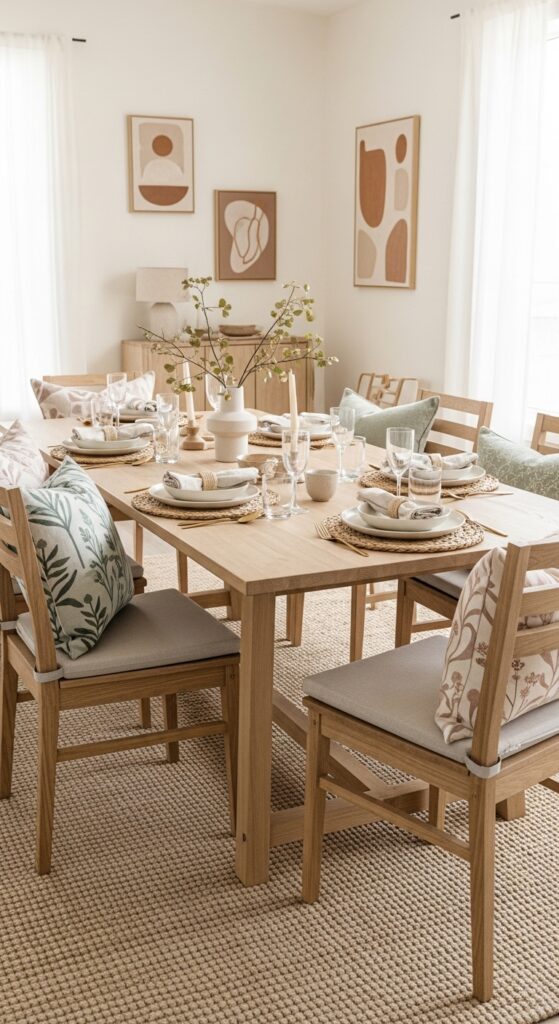
Subtle nature-inspired patterns add interest without overwhelming. Leaf motifs, linear textures, or soft geometric shapes can enhance biophilic interior design when applied sparingly in textiles or ceramics. Patterns become a gentle storytelling element rather than a focal distraction.
Using whisper-soft patterns encourages continuity and calm. They complement natural wood, stone, and light instead of competing with them, maintaining the room’s organic, human-centered feel while introducing tactile and visual richness.
23. Art That Reflects a Love for the Natural World
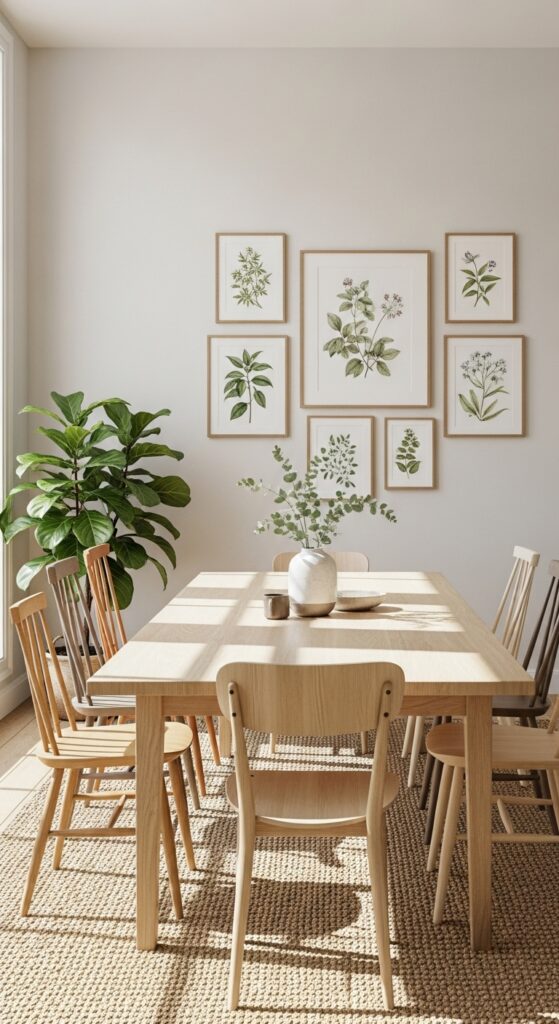
Art introduces emotion and personality to organic dining rooms. Botanical prints, landscape sketches, or abstract earth-toned paintings reinforce natural dining room design while keeping the space calm and grounded. Simple wooden frames maintain cohesion with other organic materials.
Thoughtful wall art contributes to narrative and emotional depth. It allows the dining room to feel curated and personal without clutter, supporting a sense of identity and connection within the space.
24. Building Depth Through Touch, Not Color
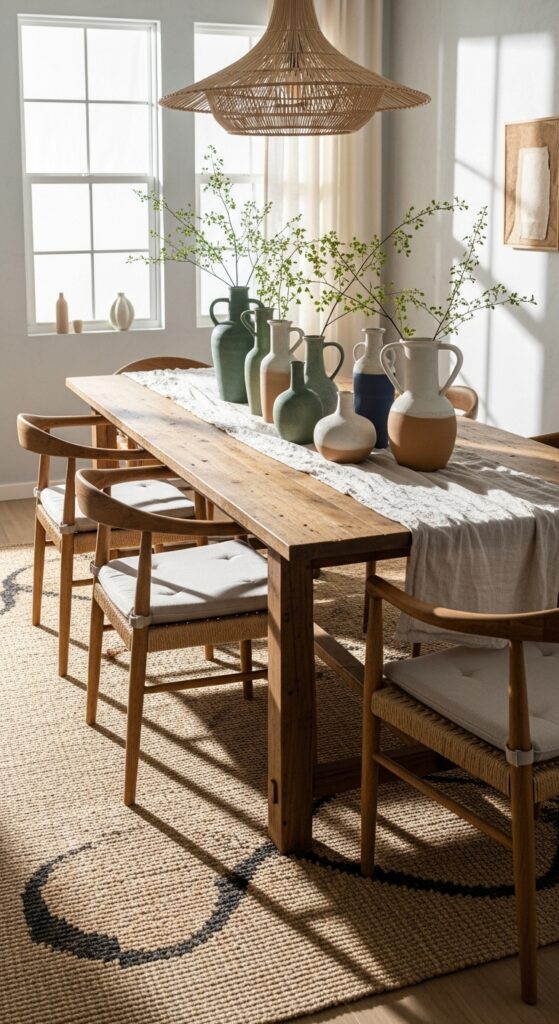
Depth in organic spaces comes from texture layering rather than contrasting color. Combining smooth ceramics, rough wood, soft textiles, and plants creates a sensory-rich environment. This approach enhances organic dining room aesthetics naturally.
Layered textures guide the eye and engage touch, creating a balanced and grounded room. Materials interact visually and physically, producing a calm, cohesive environment that feels thoughtful and lived-in.
25. Allowing the Room to Change With the Seasons
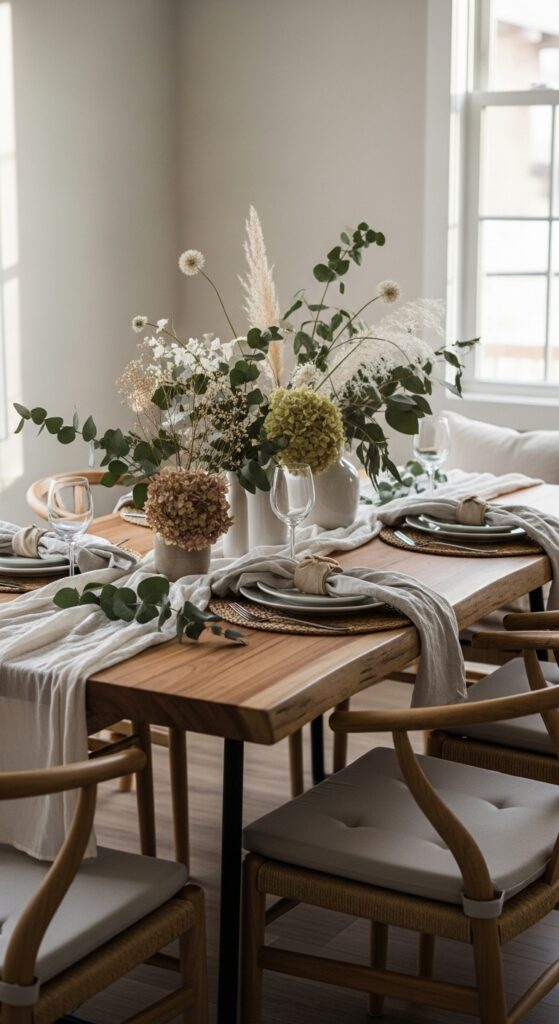
Seasonal touches bring movement and renewal into organic dining rooms. Branches, seasonal blooms, or harvest-inspired accents reinforce biophilic interior design and create dynamic spaces that change naturally.
Adjusting decor with the seasons encourages mindfulness and keeps the space feeling fresh without remodeling. Subtle seasonal styling supports calm, intentional living while maintaining the organic core of the room.
26. Objects That Carry Memory and Meaning
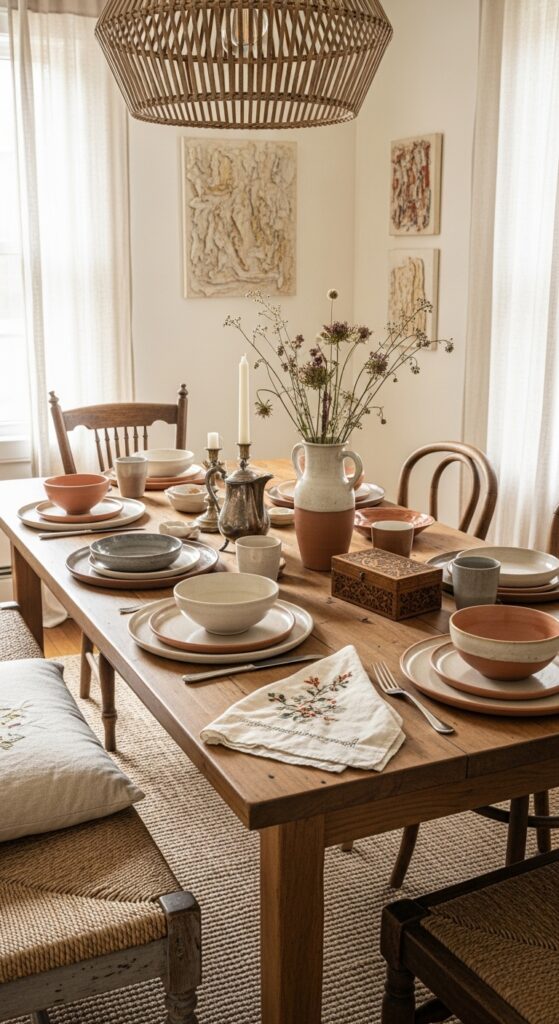
Personal objects enrich an organic dining room with story and soul. Handmade ceramics, heirlooms, or travel finds reinforce human-centered interiors by adding personal meaning. Materials align with organic values to remain cohesive.
Objects that carry meaning also encourage mindful interaction with the space. They invite stories, memories, and connection, turning the dining room into a space that is uniquely personal, grounded, and warm.
27. When Simplicity Finally Feels Complete
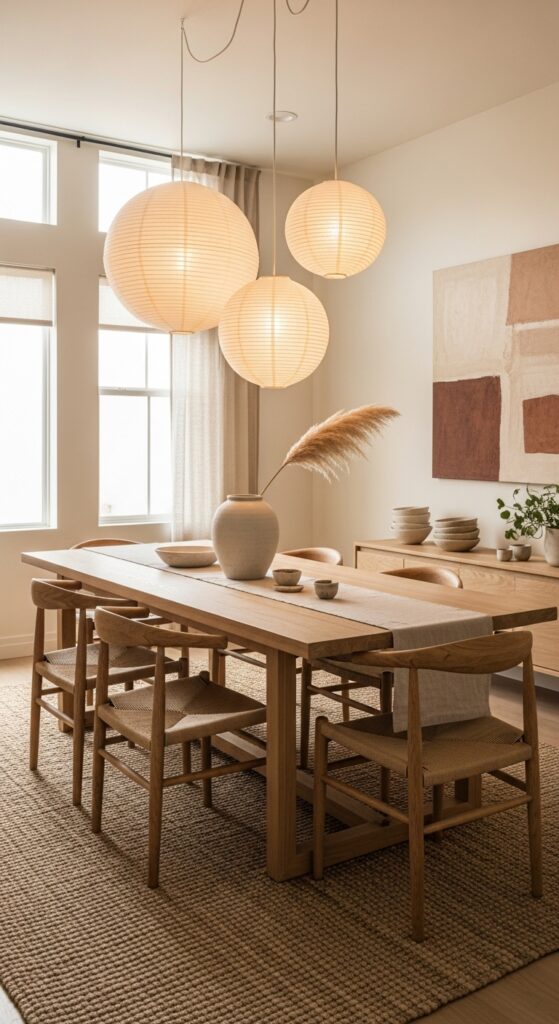
Simplicity achieves clarity when every element has purpose. Balanced proportions, intentional materials, and calm palettes create spaces that feel complete without excess. Organic dining rooms flourish when restraint and intention guide design.
A room that achieves simplicity supports presence and connection. Meals feel relaxed, conversation flows naturally, and the environment remains timeless. Thoughtful simplicity is the ultimate expression of organic dining room design.